In Pigeon Forge, Tennessee (specifically at 135 East Wears Valley Road, Suite 1), near the Ammo Outlet store) there is a nice little place called the Tennessee Bible Museum. where curator Gene Albert Jr. offers tours of assorted antiquities and other items that teach how people in America got their Bible. There is also a store where old Bibles, and books about the Bible (plus various knick-knacks) can be purchased (including Larry Stone's excellent The Story of the Bible).
Here is a brief photo-gallery showing a little of what tour-takers and store-explorers at the Tennessee Bible Museum can expect to encounter.

 |
| A handwritten Torah scroll. |
 |
Curator Gene Albert Jr. shows an example of the workspace of a medieval scribe, with several related items. Jan Hus is pictured on the desk, with a quote: "Therefore, faithful Christian, seek the truth, listen to the truth, learn the truth, love the truth, tell the truth, learn the truth, defend the truth even to death."
(You might wonder, "Why is "learn the truth" in there twice?" I think the quotation, as written by Hus in Opera Omnia, uses two different words; the second one can also be rendered as "adhere to the truth.")
 |
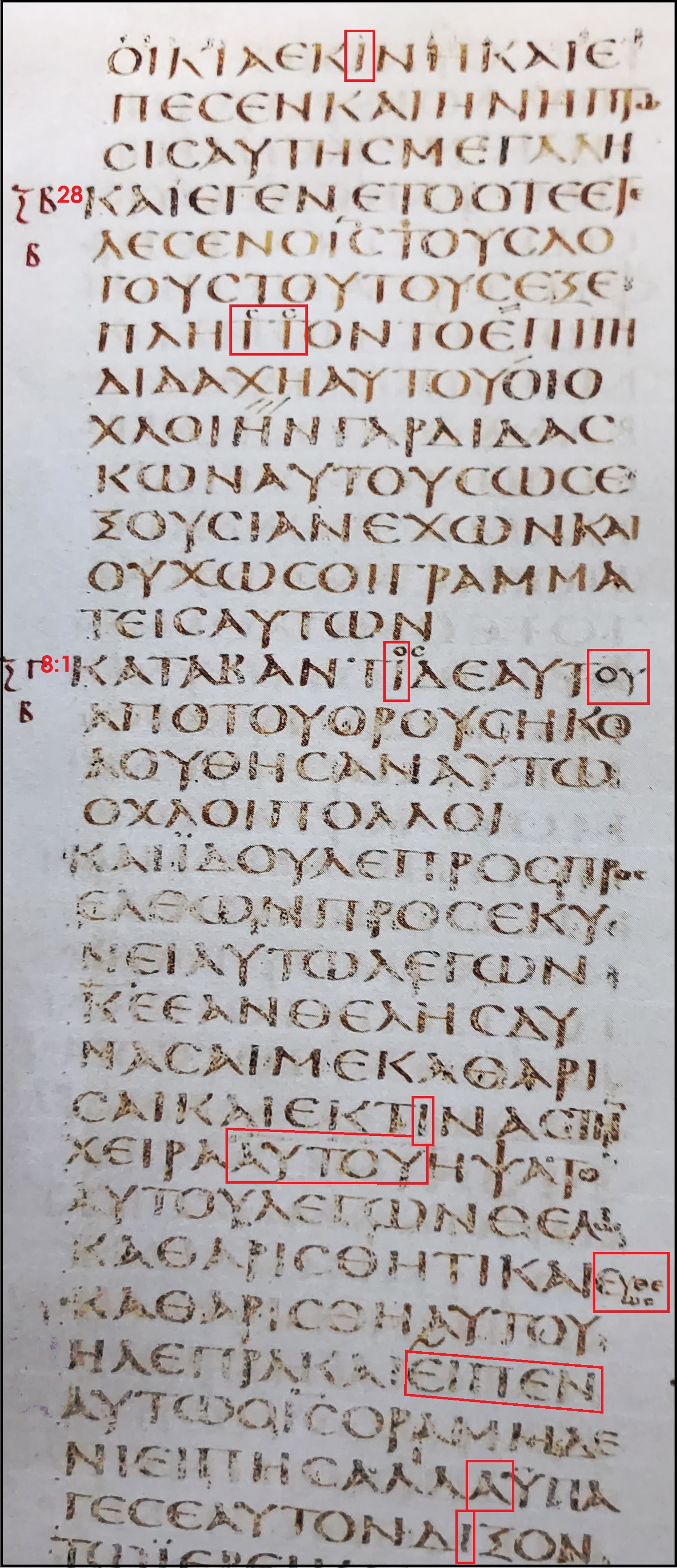
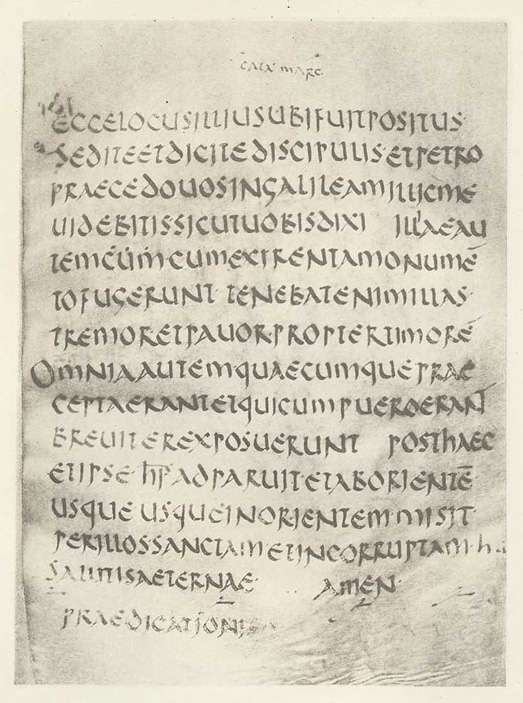
The Tennessee Bible Museum has an collection of many facsimiles of editions of the Bible that have had historical significance. I'm sure I saw a facsimile of Codex Sinaiticus in the store, as well as a multi-volume facsimile of the Complutensian Polyglot, and a facsimile of the 1611 King James Bible. Not a facsimile: this copy of Living Oracles, from 1826.

This facsimile of an illuminated Latin manuscript from the 1400s shows the artistic craftmanship that could be invested in their illustrations and marginal flourishes. Much (but not all) of the kind of art shown here gradually became a lost art after Gutenburg invented the printing press.

Modern-day Bibles and Bible-related items are also in the Tennessee Bible Museum, including the "Nano Bible" - a very small Bible on microfilm - and the Lunar Bible, the first Scriptures to ever be taken to the moon. There are also Bibles that were owned by famous individuals, such as Billy Sunday, George Bush, and Donald Trump.
The Tennessee Bible Museum is worth a visit if you're ever traveling to Pigeon Forge, TN!