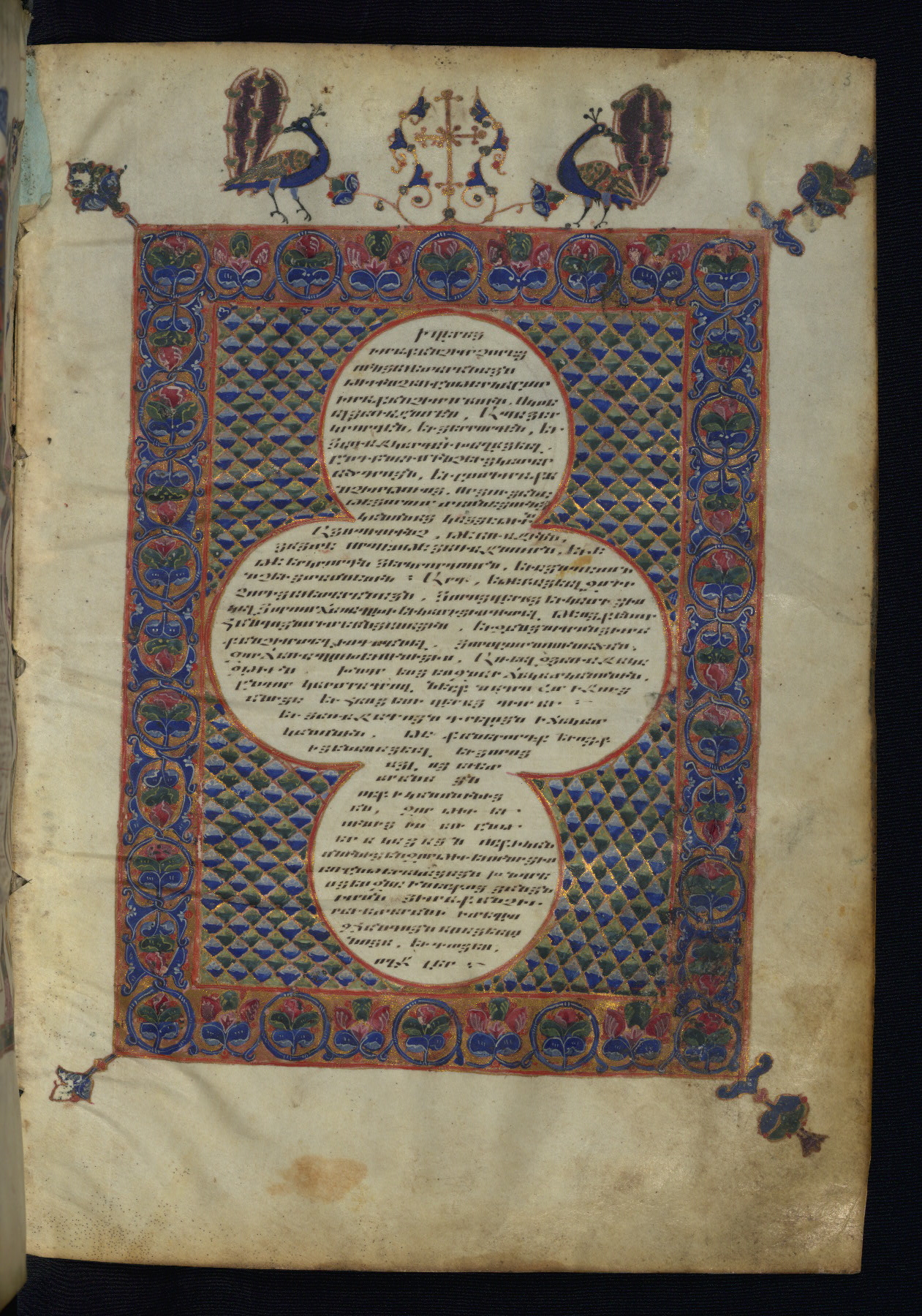
The
lopsided victory of minuscule 1324 over Codex Bezae in the previous contest has
provoked some stunned members of the audience to clamor for more hand-to-hand combat – and I am
pleased to say that a sensational heavyweight match awaits you today, ladies
and gentlemen! In the same arena,
Papyrus 75 is about to face Codex Alexandrinus.
Papyrus 75
is undoubtedly the most textually significant Greek Gospels-manuscript to be
discovered in the past eighty years.
When its text of Luke (most of chapters 3-24) and John (most of chapters
1-15) was first brought to light in 1952 as part of the Bodmer Papyri
collection (XIV-XV), Papyrus 75 was assigned a production-date in the early
200’s (and even a production-date in the late 100’s was not considered out of
the question).
Its
discovery had a significant impact on English translations: until the discovery of Papyrus 75,
the majority of the small group of scholars responsible for compiling the
base-text of the New Testament for the Revised Standard Version (first
published in 1946) had been persuaded by Hort’s arguments about Western
Non-Interpolations, and had therefore not included several phrases and
verses in Luke 24. The force of the
early support that Papyrus 75 gave to those omitted phrases and verses –
specifically
● the words
“of the Lord Jesus” in 24:3,
● the words
“He is not here! He is risen!” in 24:6,
● all of
Luke 24:12,
● the
words, “and said to them, ‘Peace unto you’” in 24:36,
● all of
Luke 24:40, and
● the
words, “and they worshipped Him” in 24:52 –
seemed too much to resist.
Rather than appear to refuse to let evidence get in the way of a good
theory, the omitted portions of Luke 24 were restored to the text by the time
the New Revised Standard Version was released in 1989. (This may say something about the instability
of the compilers’ text-critical method as much as it says anything about
Papyrus 75.) Today, in the English Standard Version,
those passages all appear in the text without even a footnote to remind people
that they were ever removed before Papyrus 75 was known.
Such is the
hard-hitting power of our first combatant, Papyrus 75, which in
2007 became part of the collection in the Vatican Library.
Facing
Papyrus 75 in today’s contest is a manuscript that needs no introduction: Codex Alexandrinus has long been hailed as
one of the most important manuscripts of the New Testament. Its production-date is generally assigned to
the early 400’s. Codex A, also known as
02, is not a complete New Testament (it is missing Matthew 1:1-25:6, and some
pages in John). Its Gospels-text is
often described as basically Byzantine, and in Acts and the Epistles it is
often described as basically Alexandrian, but there are quite a few divergent
readings. For the book of Revelation,
Codex Alexandrinus is widely considered the best extant manuscript (far
superior to Codex Sinaiticus).
Codex Alexandrinus
was not available to European scholars until 1627, when it was presented as a
gift from Cyril Lucar, the Orthodox Patriarch of Constantinople, to king
Charles I of England . It immense value was soon recognized. In the early 1700’s, when the innovative
researcher Richard
Bentley (1662-1742) was not exposing literary forgeries, editing classical
works, preaching, or corresponding with Isaac Newton, he studied Codex
Alexandrinus assiduously. On one
occasion (specifically,
on October 23, 1731), he rescued the manuscript from a fire. Bentley considered Codex A the best New Testament
manuscript in the world.
 |
| A replica of Papyrus 75's text of Luke 8:19-25. See the digital photo at the Vatican Library's website. |
Papyrus 75
shall go first in today’s contest. Here is a comparison between Luke 8:19-25 in Papyrus 75
and in the Nestle-Aland Novum Testamentum Graece, 27th edition:
19 – no variants.
20 – P75 reads απηγγελλη
instead of απηγγελη (+1)
20 – P75 does not have σου after μητηρ (-3)
21 – P75 reads αυτον
after προς instead of αυτους (+1,
-2)
22 – P75 does not have αυτος
after the first και (-5)
22 – P75 reads ανεβη
instead of ενεβη (+1, -1)
23 – P75 transposes to εις την λιμνην ανεμου (transposition)
[The parchment is damaged here but there is no discernible reason to suspect a
variant within the word λιμνην.]
24 – no variants.
25 – P75 does not have και υπακουουσιν αυτω (-18)
Thus, the
text of Luke 8:19-25 in Papyrus 75 contains 3 non-original letters, and is
missing 29 original letters, for a total of 32 letters’ worth of
corruption. Removing minor orthographic
variants from the equation, Papyrus 75 contains 1 non-original letters, and is
missing 28 original letters, for a total of 29 letters’ worth of corruption.
That’s
pretty good! If minuscule 1324 were
Papyrus 75’s opponent in today’s contest, 1324 would lose.
Now Codex
Alexandrinus steps into the ring.
Let’s see how its text of Luke 8:19 -25
– written down about 200 years after Papyrus 75 was produced – compares:
19 – Codex A reads Παρεγένοντο instead of Παρεγένετο (+2, -1)
19 – Codex A reads Παρεγένοντο instead of Παρεγένετο (+2, -1)
20 – Codex A reads Καὶ
before ἀπηγγέλη instead of δὲ after
it (+3, -2)
20 – Codex A reads λέγοντων
after αὐτῷ (+8)
20 – Codex A reads σε θέλοντες instead of θέλοντες σε
(transposition)
21 – no variants.
22 – no variants.
23 – no variants.
24 – Codex A reads ἐγερθεὶς instead of διεγερθεὶς (-2)
25 – no variants.
Codex A
thus has 13 non-original letters, and is missing 5 original letters, yield a
total of 18 letters’ worth of corruption.
Winner: Codex A.
Some Post-Fight
Analysis: Annual Corruption Rates
Let’s step
back from the individual combatants for a minute and see what the results of
this little contest might say about the transmission-lines that they represent.
On the
basis of this small sample, let’s make some calculations with the following premises in play:
● The production-date of the Gospel of John is A.D. 90.
● The Gospel of Luke has 1,151 verses.
● The Gospel of John has 879 verses.
● Papyrus 75 was made in 225.
● Codex A was made in 400.
● The results in Luke 8:19-25 are typical throughout the text of Luke and John.
With these assumptions in place, the annual corruption rate of each manuscript’s transmission-line can be calculated. In the course of 135 years, the copyists in P75’s transmission-line introduced 29 letters’ worth of corruption in six verses. Thus, on average (relying on this small sample), the copyists in Papyrus 75’s transmission-line introduced .215 letters’ worth of corruption each year, in each six-verse segment of Luke and John. Since there are 338 six-verse segments in Luke and John, a total of 72.6 letters’ worth of corruption each year is implied. At that rate, by the time Papyrus 75 was made, its text of Luke and John would be expected to contain 9,800 letters’ worth of textual corruption.
Meanwhile, in Codex A’s transmission-line – the transmission-line which perpetuated Codex A’s essentially Byzantine text of the Gospels – only 18 letters’ worth of corruption was introduced in Luke 8:19-25 in the course of 310 years, yielding an annual corruption rate per six verses of .058 letters per year. Calculating that much corruption in each six-verse segment of Luke and John, the copyists in Codex A’s ancestry introduced 19.6 letters of corruption in the text of Luke and John each year, on average, which means that by the time Codex Alexandrinus was made, its text of Luke and John would be expected to contain 6,077 letters’ worth of corruption.
In other words, based on the performance of the copyists in these two manuscripts’ transmission-lines in this particular passage, the expectation that Codex A, rather than Papyrus 75, will have a more faithful text at any given point, is entirely justified, even though Codex A’s text’s transmission-line is over twice as long (310 years) as that of Papyrus 75 (135 years).
Finally, it should be noticed that the non-inclusion of και υπακουουσιν αυτω in Luke 8:25 is attested not only by Papyrus 75 but also by Codex Vaticanus, which confirms (along with an abundance of other rare agreements) a rather close historical relationship between the two. That is, they share the same transmission-line. If the annual corruption rate of Papyrus 75’s transmission-line were extended to the year 325 (i.e., if the Alexandrian copyists continued to add 72.6 letters’ worth of corruption to the text of Luke and John each year, up to the approximate production-date of Codex Vaticanus), then by 325, the text of Luke and John in the Alexandrian transmission-line at the time when Codex Vaticanus was made would have contained 17,061 letters’ worth of corruption. Thus, in the text of Luke and John, almost three times as much corruption would be in Codex B’s transmission-line when Codex B was made, as would be in Codex A’s transmission-line when Codex A was made.
● The production-date of the Gospel of John is A.D. 90.
● The Gospel of Luke has 1,151 verses.
● The Gospel of John has 879 verses.
● Papyrus 75 was made in 225.
● Codex A was made in 400.
● The results in Luke 8:19-25 are typical throughout the text of Luke and John.
With these assumptions in place, the annual corruption rate of each manuscript’s transmission-line can be calculated. In the course of 135 years, the copyists in P75’s transmission-line introduced 29 letters’ worth of corruption in six verses. Thus, on average (relying on this small sample), the copyists in Papyrus 75’s transmission-line introduced .215 letters’ worth of corruption each year, in each six-verse segment of Luke and John. Since there are 338 six-verse segments in Luke and John, a total of 72.6 letters’ worth of corruption each year is implied. At that rate, by the time Papyrus 75 was made, its text of Luke and John would be expected to contain 9,800 letters’ worth of textual corruption.
Meanwhile, in Codex A’s transmission-line – the transmission-line which perpetuated Codex A’s essentially Byzantine text of the Gospels – only 18 letters’ worth of corruption was introduced in Luke 8:19-25 in the course of 310 years, yielding an annual corruption rate per six verses of .058 letters per year. Calculating that much corruption in each six-verse segment of Luke and John, the copyists in Codex A’s ancestry introduced 19.6 letters of corruption in the text of Luke and John each year, on average, which means that by the time Codex Alexandrinus was made, its text of Luke and John would be expected to contain 6,077 letters’ worth of corruption.
In other words, based on the performance of the copyists in these two manuscripts’ transmission-lines in this particular passage, the expectation that Codex A, rather than Papyrus 75, will have a more faithful text at any given point, is entirely justified, even though Codex A’s text’s transmission-line is over twice as long (310 years) as that of Papyrus 75 (135 years).
Finally, it should be noticed that the non-inclusion of και υπακουουσιν αυτω in Luke 8:25 is attested not only by Papyrus 75 but also by Codex Vaticanus, which confirms (along with an abundance of other rare agreements) a rather close historical relationship between the two. That is, they share the same transmission-line. If the annual corruption rate of Papyrus 75’s transmission-line were extended to the year 325 (i.e., if the Alexandrian copyists continued to add 72.6 letters’ worth of corruption to the text of Luke and John each year, up to the approximate production-date of Codex Vaticanus), then by 325, the text of Luke and John in the Alexandrian transmission-line at the time when Codex Vaticanus was made would have contained 17,061 letters’ worth of corruption. Thus, in the text of Luke and John, almost three times as much corruption would be in Codex B’s transmission-line when Codex B was made, as would be in Codex A’s transmission-line when Codex A was made.
_______________
Readers are invited to double-check the data and calculations in this post.