Followers

Showing posts with label itacism. Show all posts

Friday, April 27, 2018

Glossary of Textual Criticism: D-M


(Continuing the Glossary of Textual Criticism)

Diorthotes
: The proof-reader and general overseer of the production of manuscripts in a scriptorium.  

Dittography:  A scribal mistake in which what should be written once is written twice.  This can describe the repetition of a single letter, a line, or even (rarely) a whole paragraph.
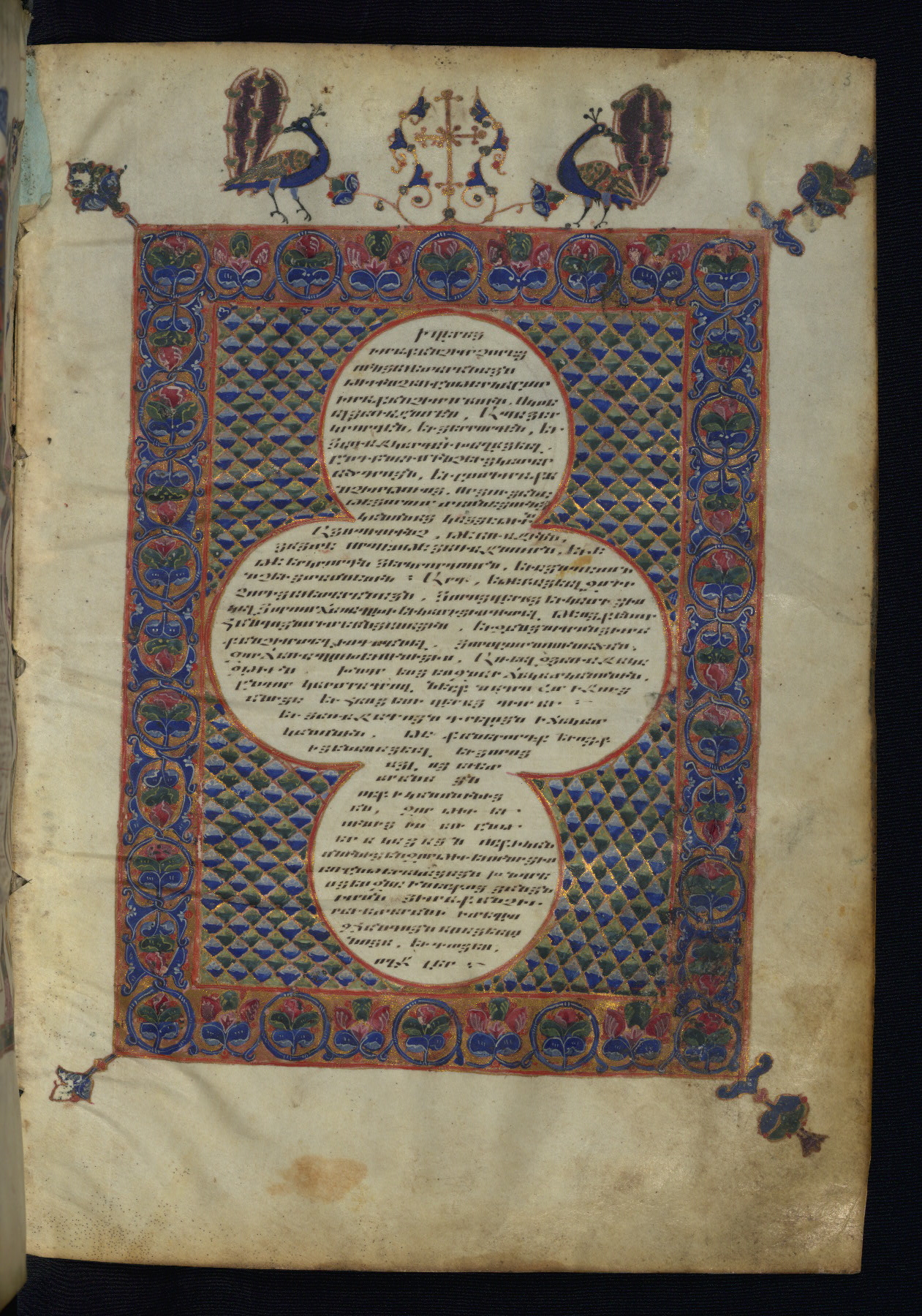
Eusebian Canons:  A cross-reference system for the Gospels, devised by Eusebius of Caesarea to help readers efficiently find and compare parallel-passages (and thematically related passages).  The basic idea is that numbers were assigned to every section of every Gospel, and each number was put into one of ten lists, or canons, in a chart at the beginning of the Gospels.  The first list presented the identification-numbers of passages in which parallels exist in all four Gospels; the tenth list presented the identification-numbers of passages which appear in one Gospel only, and lists 2-9 present the identification-numbers of passages in combinations of Gospels (such as Matthew+Mark+Luke).  The Eusebian Canons were often prefaced by Eusebius’ composition Ad Carpianus, in which an explanation was given of how to use the cross-reference chart.  In some Greek manuscripts, some Latin manuscripts, and especially in Armenian manuscripts, the Eusebian Canons are elaborately decorated.  In a few deluxe copies, the text of Ad Carpianus appears within a quatrefoil frame.
            Also, in some manuscripts, the copyists have put extracts from the Canon-tables below the main text, relieving the reader of the need to consult the Canon-tables in order to identify parallel-passages.  This is called a foot-index, because it appears at the foot of the page.
           
Euthalian Apparatus:  A collection of supplemental study-helps and systems of chapter-divisions for Acts and the Epistles, developed by an individual named Euthalius (who to an extent adopted earlier similar materials prepared by Pamphilus).  Little is known about Euthalius and the extent to which his initial work has been adjusted and expanded by others; the detailed analysis Euthaliana, by J. A. Robinson, remains an imperfect but valuable resource on the subject.

Family 35:   A cluster of over 220 manuscripts which represent the same form of the Byzantine Text.  Wilbur Pickering has reconstructed its archetype.

Flyleaves:  Unused pages at the beginning and end of a manuscript.  In some cases, these pages consist of discarded pages from older manuscripts, glued into or onto the binding. 

Genre distinction:  The practice of recognizing each genre of literature in the New Testament (Gospels, Acts, Epistles, and Revelation) as having its own transmission-history.

Gregory’s Rule:  An arrangement of the pages of a manuscript in such a way that the flesh-side of the parchment (i.e., the inner surface of the animal-skin from which the parchment was made) faces the flesh-side of the following page, and the hair-side of the parchment (i.e., the outer, hair-bearing surface of the animal-skin from which the parchment was made) faces the hair-side of the following page.  Only a few manuscripts, such as 059, do not have their pages uniformly arranged in this way.  (Named after C. R. Gregory.)

Harklean Group:  A small cluster of manuscripts which display a text of the General Epistles which is related to, and strongly agrees with, the painstakingly literal text of the Harklean Syriac version (which was produced in A.D. 616 by Thomas of Harkel, who made this revision of the already-existing Philoxenian version (which was completed in 508 as a revision/expansion of the Peshitta version) by consulting Greek manuscripts in a monastery near Alexandria, Egypt which he considered especially accurate).  The core members of the Harklean Group are 1505, 1611, 2138, and 2495.  Some other manuscripts have a weaker relationship to the main cluster, including minuscules 429, 614, and 2412. 
            Although the Greek manuscripts in the Harklean Group are all relatively late, they appear to echo a text of the General Epistles which existed in the early 600s, and perhaps earlier, inasmuch as Codex Sinaiticus (produced c. 350) contains in the third verse of the Epistle of Jude a reference to “our common salvation and life,” a reading which appears to be a conflation between an Alexandrian reading (“our common salvation”) and the reading of the Harklean Group (“our” (or “your”) “common life”). 
                   
Headpiece:  A decorative design accompanying the beginning of a book of the New Testament in continuous-text manuscripts, and sometimes accompanying the beginnings of parts of lectionaries.  These may sometimes be extremely ornate, especially in Gospel-books.

Homoioarcton:  A loss of text caused when a copyist’s line of sight drifted from the beginning of a word, phrase, or line to the same (or similar) letters at the beginning of a nearby word, phrase, or line.  Often abbreviated as “h.a.

Homoioteleuton:  A loss of text caused when a copyist’s line of sight drifted from the end of a word, phrase, or line to the same (or similar) letters at the end of a nearby word, phrase, or line.  Often abbreviated as “h.t.  (Many short readings can be accounted for as h.t.-errors, such as the absence of Matthew 12:47 in some important manuscripts.)

This detail from Lectionary 1963
features a simple headpiece, a rubric,
an initial, and an incipit before the text of
Matthew 5:42-43.
Initial:  A large letter at the beginning of a book or book-section, especially one enhanced by special ornateness and color.  In some Latin codices an initial may occupy almost an entire page.

Interpolation:  Substantial non-original material added to the text by a copyist.  Although patristic writings utilize several saying of Jesus that are not included in the Gospels, Codex Bezae is notable for its inclusion of interpolations in Matthew 20:28 and Luke 6:4.  Due in part to Codex Bezae’s text’s tendency to adopt longer readings, Hort proposed in the 1881 Introduction to the Revised Text that Codex Bezae’s shorter readings in Luke 24 are original, and that in each case, the longer reading is not original, despite being supported in all other text-types.  Hort labeled D’s text at these points “Western Non-Interpolations.”        

Itacism:  The interchange of vowels, such as the writing of ει itstead of ι, ε instead of αι, and ο instead of ω.   

Jerusalem Colophon:  A note which, in its fullest form, says, “Copied and corrected from the ancient manuscripts of Jerusalem preserved on the holy mountain.”  Fewer than 40 manuscripts have this note, including Codex Λ/566, 20, 117, 153, 215, 300, 565, 1071, and 1187; in 157 it is repeated after each Gospel.  

Kai-compendium:  An abbreviation for the word και, consisting of a kappa with its final downward stroke extended.

Kephalaia:  Chapters.  In most Gospels-manuscripts, each Gospel is preceded by a list of chapters:  Matthew has 68 chapters; Mark has 48, Luke has 83, and John has 18 or 19.  Chapter-titles typically appear at the top (or bottom) of the page on which they begin, with the chapter-number in the margin.

Lacuna:  A physical defect in a manuscript which results in a loss of text.

Lectionary:  A book consisting of sections of Scripture for annual reading.  Scripture-passages in lectionaries are arranged according to two calendar-forms:  the movable feasts, beginning at Easter, contained in the Synaxarion, and the immovable feasts, beginning on the first of September (the beginning of the secular year), contained in the Menologion.   
 
Lectionary Apparatus:  Marginalia and other features added to New Testament manuscripts in order to make the manuscripts capable of being used in church-services for lection-reading.  These features usually include a table of lection-locations before or after the Scripture-text.  Symbols are inserted in, or alongside, the text of each passage selected for annual reading:  αρχη for “start,” “υπερβαλε” for “skip,” “αρξου” for “resume,” and τελος for “end.”  Rubrics are sometimes added to identify readings for Christmas-time and Easter-time, and holidays considered especially important by the scribe(s).  Incipits, phrases to introduce the readings, often appear alongside the beginning of lections, or alongside the rubric in the upper or lower margin.  

Letter-compression:  A method writing in which letters are written closer to each other than usual, and some letters are written in such a way as to occupy less space than unusual,  This indicates that the scribe was attempting to reserve space.  It occurs especially on cancel-sheets made to remedy omissions by the main scribe.

Majuscule:  A manuscript in which each letter is written separately and as a capital.  These are also known as uncials.  Many majuscules, or uncials, are identified by sigla (singular:  siglum) such as the letters of the English alphabet, letters of the Greek alphabet, and, for Codex Sinaiticus (À), the Hebrew alphabet.  All uncials are identified by numbers that begin with a zero. 

A rare full-page miniature
in GA 2370 at the
Walters Art Museum -
Christ Blessing the Apostles
.
Miniature:  An illustration, often (but not always) situated within a red frame.  The term has nothing to do with the size of the illustration; it is derived instead from the red pigment, minium, which was often used to render the frame around the picture.  (This pigment was famously used in the Book of Kells to make thousands of small dots in the illustrations.)  Miniatures of the evangelists frequently appear as full-page portraits, showing each evangelist in the process of beginning his written account; John is typically pictured assisted by Prochorus.       

Minuscule:  A manuscript in which the letters of each word are generally connected to each other.  The transition from majuscule, or uncial script, to minuscule script, occurred during the 800s and 900s, and was led by Theodore the Studite.  Uncial script was still used, however, for lectionaries in the following centuries. 

Mixture:  A combination of two or more text-types within the text of a single manuscript.  When mixture occurs, it normally is manifested as readings from one text-type sprinkled throughout a text which otherwise agrees with another text-type.  In block-mixture, distinct sections represent distinct text-types.  Codex W exhibits block-mixture; in Matthew and in Luke 8-24 its text is almost entirely Byzantine, but other text-types are represented in the rest of the Gospels-text.   
[Continued]
  

Friday, January 5, 2018

Lectionary 5 in Matthew 24:20-26

            Today, let’s look at the text on one page of a medieval lectionary and see how well it compares to the same passage in Codex Vaticanus (the flagship manuscript of the Alexandrian text of the Gospels) and Codex Bezae (the flagship manuscript of the Western text of the Gospels).  The passage is Matthew 24:20-26, and the lectionary is Lectionary 5, also known as Barocci MS 202, at the Bodleian Library. It was written in uncial lettering in the early 1000’s.   (I have not received a response from the Bodleian’s permissions-department, so no image of the manuscript is posted here – but you can see the zoomable, full-color page with Matthew 24:20-26 – page-view 301 out of 316, marked as fol. 147 at the top of the page – at the Digital Bodleian website.) 
            In the following comparison, the Tyndale House edition of the Greek New Testament was used as the standard of comparison.  Differences in the format of sacred names, contractions for και, and differing forms of letters are not counted as textual differences.  The total number of differences between the THEGNT-text and each witness will be given, as well as the number of differences without minor vowel-exchanges (itacisms) in the picture. 

LECTIONARY 5

20 – χειμονος instead of χειμωνος (+1, -1)
21 – omits τοτε (-4)
21 – ουδε instead of ουδ’ ου (+1, -2)
22 – η instead of ει (+1, -2)
22 – εκολοβοθησαν instead of εκολοβωθησαν (+1, -1)
22 – κολοβοθησονται instead of κολοβωθησονται (+1, -1)
23 – ηπη instead of ειπη (+1, -2)
24 – δοσουσιν instead of δωσουσιν (+1, -1)
24 – omits μεγαλα (-6)
25 – προηρηκα instead of προειρηκα (+1, -2)
26 – ειποσιν instead of ειπωσιν (+1, -1)


21 – θλειψις instead of θλιψις (+1)
23 – πιστευετε instead of πιστευσητε (a corrector has superlinearly written η (so as to read πιστευητε) (+1, -2)
24 – ψευδοχρειστοι instead of ψευδοχριστοι (+1)


20 – προσευχεσθαι instead of προσευχεσθε (+2, -1) 
21 – θλειψις instead of θλιψις (+1)
21 – ουκ εγενετο instead of ου γεγονεν (+5, -5)
21 – does not have του before νυν (-3)
23 – υμειν instead of υμιν (+1)
23 – εκει instead of ωδε (+3, -2)
23 – πιστευσηται instead of πιστευσητε (+2, -1)
24 – ψευδοχρειστοι instead of ψευδοχριστοι (+1)
24 – πλανηθηναι instead of πλανησαι (+3, -1)
25 – υμειν instead of υμιν (+1)
26 – υμειν instead of υμιν (+1)
26 – εξελθηται instead of εξελθητε (+2, -1)
26 – πιστευσηται instead of πιστευσητε (+2, -1)

RP2005:  better than
Codex Vaticanus.
            This yields the following results:  Codex Vaticanus has only has five letters’ worth of corruption in this passage, and is one letter longer than the text in THEGNT.  Lectionary 5’s text contains nine non-original letters and is missing 23 original letters.  With itacisms removed from consideration, Lectionary 5’s text remains ten letters shorter than the text in Vaticanus.
            Codex Bezae’s text is the least accurate of the three:  although it is about twice as old as Lectionary 5, Codex D has 24 non-original letters and is missing 15 original letters, for a total of 39 letters’ worth of corruption.  (Lectionary 5, with 9 non-original letters and with 23 original letters omitted, has 32 letters’ worth of corruption.  Without itacisms in the picture, Lectionary 5 has 13 letters’ worth of corruption, and D has 22 letters’ worth of corruption.)  
 
This data may raise some questions:
            ● If scribes tended to add to the text, how is it that a manuscript from the 400’s (or 500’s) has 24 non-original letters here, and a Byzantine manuscript from c. 1000, only has 9 non-original letters, if scribes tended to add to the text?  Apparently the scribes in the ancestral transmission-line of Lectionary 5 never got the memo that stated that they were supposed to gain accretions. 
            ● The RP2005 Byzantine Textform agrees more closely in this passage with the THEGNT and the UBS/NA compilations than Codex Vaticanus and Codex Bezae do.  Even the Textus Receptus – the base-text of the King James Version, compiled in the 1500’s – agrees with THEGNT and NA27 more closely in this passage than the early manuscripts Vaticanus and Bezae do.  How is it that compilations based on late manuscripts, whether many or few, have the best text in this passage?  
            ● Considering that the text of Matthew 24:20-26 in Codex B in the 300’s is longer than the text of Matthew 24:20-26 in Lectionary 5, why do some textual critics (looking at  you, Dan Wallace) continue to teach that copyists – particularly Byzantine copyists – gradually expanded the text?  How many times and in how many ways does the opposite need to be demonstrated before scholars and commentators will concede that no preference should be generally assumed in favor of the shorter reading?


Tuesday, September 19, 2017

Hand to Hand Combat: Codex D versus 1324

            It’s time once again for hand-to-hand combat!  Today’s combatants are Codex Bezae and minuscule 1324.  The arena is Luke 8:19-25.
            Codex Bezae, also known as Codex 05 and as Codex D, is named after Theodore Beza, an important Protestant theologian and textual researcher of the 1500’s who owned the manuscript, and who donated it to Cambridge University in 1581, where it resides to this day.  (Because it is at Cambridge, it is also known as Codex Bezae Cantabrigiensis.) 
            Readings from Codex Bezae were cited, albeit inaccurately, in the footnotes of Stephanus’ 1550 edition of the Greek New Testament.  This poses a problem for those who claim that the Textus Receptus was compiled using only late manuscripts, because Codex D is not late.  It has been assigned to the end of the 300’s or early 400’s by David C. Parker (though earlier researchers considered it a century younger).  It is the primary Greek support for what has been called the “Western” text of the Gospels. 
            Codex Bezae is a Greek-Latin manuscript; it contains not only the Greek text of (most of) the Gospels and Acts, but also the Latin text, on alternating pages, so if one opens the codex to any undamaged portion, the Greek text of a passage will be on the page to the reader’s left, and the Latin text of approximately the same passage will be on the page to the reader’s right.  (Also, a Latin page containing a snippet of text from the end of Third John survives, testifying that the codex originally had more books than it does now.)
            Minuscule 1324 is a Greek Gospels-manuscript from the 1000’s, and is part of the collection held by the Jerusalem Patriarchate; it is catalogued as Panagios Taphos 60.  Before the text of the Gospels begins, 1324 has the Eusebian Canon-tables, elaborately decorated, and before the canon-tables is Ad Carpianus (a letter from Eusebius to Carpian, which serves as a manual on how to use the canon-tables to find parallel-passages in the Gospels).
            Notably, the text of Ad Carpianus is framed within a quatrefoil, similar to the same feature in minuscule 157, and also like the empty framework found in minuscule 1191 (a Gospels-manuscript at Saint Catherine’s monastery), and like the format of the Armenian text of Ad Carpianus in Walters MS 538 – but especially reminiscent of the cut-out framework of Ad Carpianus in minuscule 2812 (the Zelada Gospels).
            Miniscule 1324 is a beautiful manuscript, neatly written and finely illustrated.  Each Gospel in Codex Bezae begins with red text (see Matthew, John, Luke, and Mark), and its lettering is sufficiently neat, but the artistry in 1324 is far more impressive; each Gospel in 1324 has a full-page illustration of its author, and an intricately detailed headpiece (see Matthew, Mark, Luke, and John).  (In these pages, by the way, notice the use of a metobelus-mark (÷) to signify the beginning of a section of text, rather than a textual variant.)  In addition, the parchment of the pages on which the chapter-lists for the Gospels are written has been dyed purple – a rare and sumptuous feature.
            But how will the text of 1324 perform in the ring against an opponent that is 600 years older?  Let’s find out by comparing the text of Luke 8:19-25 in each manuscript to the text of the 27th edition of the Nestle-Aland Novum Testamentum Graece.     
            First, the rules of the ring:  each non-original letter in a manuscript’s text is counted as a point, and each original letter that is absent in a manuscript’s text is counted as a point; the winner will be the manuscript with fewer points.  Transpositions are mentioned but not counted if no text is lost.  Contractions are not considered variants.  Itacisms, iota adscript/subscript, and movable-nu variants will be listed and counted, but a separate calculation will be made which does not take them into consideration. (These inconsequential variants are indicated by underlined verse-numbers.)  
            Here is a comparison of 1324’s text to the text of NA27: 

19 – 1324 reads Παρεγένοντο instead of Παρεγένετο (+2, -1)
19 – 1324 reads αυτωι instead of αὐτῷ (+1)
20 – 1324 reads Καὶ before ἀπηγγέλη instead of δὲ after it (+3, -2)
20 – 1324 reads λέγοντων after αὐτῷ (+8)
20 – 1324 reads σε θέλοντες instead of θέλοντες σε (transposition)
21 – 1324 reads αὐτόν at the end of the verse (+5) [This Byzantine reading is not noted in NA27.]
22 – no variants.
23 – 1324 reads ἀφύπωσε instead of ἀφύπωσεν (-1)
23 – no variants.
24 – 1324 reads Καὶ before προσεθόντες instead of δὲ after it (+3, -2)
24 – 1324 reads ἐγερθεὶς instead  of διεγερθεὶς (-2) [This Byzantine reading is not noted in NA27.]
24 – 1324 reads ἐπετίμησε instead of ἐπετίμησεν (-1)
24 – 1324 reads ἀνέμωι instead of ἀνέμῳ (+1)
24 – 1324 reads τωι instead of τῳ (+1)
24 – 1324 reads μεγάλη after γαλήνη (+6)
25 – 1324 reads ἐστιν after ποῦ (+5)
25 – 1324 reads τωι instead of τῳ (+1)
25 – 1324 reads αυτωι instead of αὐτῷ (+1)

            Thus, in these six verses, 1324 has 37 non-original letters, and is missing 9 original letters, for a total of 46 letters’ worth of corruption.  When inconsequential orthographic variants are removed from the equation, 1324 has 32 non-original letters, and is missing 7 original letters, for a total of 39 letters’ worth of corruption.  

            Now let’s compare Codex Bezae’s text of Luke 8:19-25 to NA27, and see how well “one of our oldest witnesses” (as described by Bart Ehrman) performs:

19 – D reads αυτου after μήτηρ (+5)
19 – D reads οτι after αυτω (+3)
20 – D reads εξω εστήκασιν instead of εστήκασιν εξω (transposition)
20 – D reads ζητουντες instead of ιδειν θέλοντες (+5, -9)
21 – D does not have προς after ειπεν (-4) 
21 – D reads αυτοις instead of αυτους (+1, -1)
21 – D reads οι before αδελφοι (+2)
22 – D does not have και after ημερων (-3)
22 – D reads αναβηναι αυτον instead of αυτος ενεβη (+6, -3, assuming a transposition)
23 – D reads λελαψ instead of λαιλαψ (+1, -2)
23 – D reads πολλη after ανεμου (+5)
24 – D reads κε κε (i.e., κυριε κυριε) instead of επιστατα επιστατα (+4, -16) [This could fairly be counted as +10, -16.]
24 – D reads ἐγερθεὶς instead  of διεγερθεὶς (-2)
24 – D reads επετειμησεν instead of επετιμησεν (+1)
24 – D does not have του υδατος (-9) 
25 – D reads εστιν after που (+5)

            Thus Codex D has 38 non-original letters in Luke 8:19-25, and is missing 49 original letters, for a total of 87 letters’ worth of corruption.  When inconsequential orthographic variants are removed from the equation, Codex D has 36 non-original letters, and is missing 47 original letters, for a total of 83 letters’ worth of corruption. 

            Let’s go to the scorecards.  When accretions are compared, 1324 wins:  it has only 32, whereas D has 36.  (Even if itacisms and such were considered, 1324 still wins by one.)  And when omissions are compared, 1324 virtually knocks Codex Bezae out of the ring:  1324 omitted 7 original letters but Codex D omitted 47!  The clear winner:  minuscule 1324! 

Some Post-Fight Analysis

            This comparison, though anecdotal, suggests that a few common axioms should be challenged or significantly adjusted:
            ● The oldest manuscripts should be preferred . . . right? 
            It seems perfectly reasonable to think that the older a manuscript is, the better its text is likely to be.  Every time the text was copied, there was a risk of the introduction of new corruptions.  The older a manuscript is, the fewer generations of copies are likely to be between it and the autograph. 
            However, the force of this mere likelihood shrinks when one observes the liberties that were taken by the copyists in the Western textual tradition in the second and third centuries.  Situated in locales where Greek and Latin competed to be the lingua franca, Western copyists prioritized the meaning of the text, and were not averse to replacing original expressions with different expressions that seemed to them to be more precise, more reverent, and less vulnerable to misunderstanding. 
            An example:  in Mark 7:19, Jesus says that after a man has eaten food, what remains – that is, dung – “goeth out into the draught,” as the KJV puts it.  The “draught” (Greek ἀφεδρῶνα) is a latrine or toilet.  Some English translators, softening Jesus’ earthy reference, translate this as “sewer” (see for example the MEV, NET, NLT, and NRSV).  Some others are yet more evasive, simply saying that the food is eliminated or expelled from the body (see for example the NKJV, ESV, CSB, NIV, and NASB).  Just as our modern English translators have tended to avoid Jesus’ reference to a latrine or toilet in Mark 7:19, so did the person or persons responsible for the Western Text:  Codex D replaces the latrine with a sewer, reading οχετον (i.e., “sewer”). 
            One might say that if the text of the Gospels were translated into English using a “dynamic equivalence” technique, occasionally resorting to paraphrase, and then translate the resultant English text back into Greek, the result would be similar to the Western Text.  Very many alterations to the form of the text resulted as copyists attempted to maximize what they perceived to be the meaning of the text – and this was happening in the 100’s and 200’s (not, as far as the Gospels-text is concerned, as a one-time revision, but as an ongoing process).  There is thus no reason to expect that manuscripts fished out of a transmission-stream heavily contaminated by Western corruptions will have fewer corruptions than  manuscripts from some other transmission-stream, regardless of their ages.
            If the editors of the Textus Receptus had trusted their earliest available manuscript in the 1500’s, then instead of introducing 33 letters’ worth of corruption (working from the premise that NA27’s compilation of Luke 8:19-25 is completely correct), they would have introduced 83 letters’ worth of corruption.

            ● Scribes tended to add rather than omit . . . right? 
            In Luke 8:24, 1324 displays a harmonization:  “great” (μεγάλη) was added to “calm” (γαλήνη), which brings the passage into closer agreement with the parallel-passage in Matthew 8:26 and Mark 4:39.  Yet, on balance, when compared to Codex D – a manuscript 500 years older – 1324 has slightly fewer accretions in Luke 9:19-25.  If (as Daniel Wallace has claimed) copyists were applying “If in doubt, don’t throw it out” as a basic principle, and were thus expanding the text for 600 years (from 400 to 1000), how is it that the Byzantine manuscript from the 1000’s has a text of Luke 8:19-25 with fewer accretions than a text from the early 400’s?       
            The more the text-critical canon, “prefer the shorter reading” is tested, the more its wrongness is demonstrated.  Yet the critical text of Nestle-Aland/UBS still agrees quite closely with the Westcott-Hort 1881 compilation, for which this canon was constantly in play.            

            ● The Western Text of the Gospels is characterized by expansion and elaboration . . . right?
            The Western Text, according to the late Bruce Metzger (see p. 213, The Text of the New Testament) “is usually considered to be the result of an undisciplined and ‘wild’ growth of manuscript tradition and translational activity.”  I draw your attention to the word “growth.”  A better term might be “change,” because it is not unusual at all to find readings in the Western Text that are shorter than their rivals.  In the six verses studied here, inasmuch as Codex D’s text has 36 non-original letters, and is missing 47 original letters, its text is 11 letters shorter than the original text (using NA27 as the basis of comparison). 
            In one variation-unit in this passage, the text of D is shorter because of the excision of perceived superfluity:  in verse 24, the phrase “of the water” has disappeared, and one can picture a Western copyist thinking, “There’s no need to say that the waves were made of water.”  The same phenomenon is observable in modern paraphrases; look in the CEV, the Easy-To-Read Version, the God’s Word translation, the hyper-paraphrase known as “The Message,” and the New American Bible for examples.    
            Therefore, when encountering a Byzantine reading that is longer than its Western rival, we should consider the intrinsic character of the Byzantine reading, and ask, “Could a translator consider the content of this variant superfluous?” and if the answer is “Yes” then the Western reading should be considered suspect.  Perhaps one could go further and say that the same approach should be in play when comparing Byzantine and Alexandrian readings – and it does not seem absurd to suggest that when Alexandrian and Western witnesses support the non-inclusion of a superfluous-seeming word or phrase, we may be seeing the effects of the same scribal tendency in both transmission-streams.
           
            ● The Textus Receptus is essentially a late medieval text . . . right? 
            Setting aside itacisms and other such variations, the Textus Receptus reads just like 1324 in Luke 8:19-25, with a few exceptions:
            22 – TR reads Καὶ εγένετο instead of Ἐγένετο δε (+3, -2)
            24 – TR reads προσεθόντες δὲ instead of Καὶ προσεθόντες (agreeing with NA27)
            24 – TR does not read μεγάλη after γαλήνη (agreeing with NA27)
Which means that the Textus Receptus is slightly more accurate in Luke 8:19-25 than 1324’s text.  If one were to select any medieval Byzantine manuscript at random, its text of Luke 8:19-25 would very probably trounce the text of Codex D in a direct comparison.  


_______________
Readers are invited to double-check the data and calculations in this post.  

Tuesday, August 8, 2017

Hand-to-Hand Combat! Sinaiticus vs. Minuscule 2474

           
The first page of the Gospel of John
in the Elfleda Bond Goodspeed Gospels
.
            It’s time for some hand-to-hand combat!  Today’s contest takes place in Matthew 24:23-30, a passage which contains some of Jesus’ instructions to His disciples regarding false prophets and signs of the end of the world.  The combatants:  Codex Sinaiticus – which is universally acknowledged as a very important manuscript, having been produced c. 350 – and minuscule 2474, known as the Elfleda Bond Goodspeed Gospels.
            Among New Testament manuscripts, Codex Sinaiticus is among the most famous.  As for minuscule 2474, few people knew of its existence until early in 1952, when it was purchased in Istanbul (Constantinople) by the American collector Harry Kurdian of Wichita, Kansas; it was acquired by Edgar J. Goodspeed later the same year.  He added it to the manuscript-collection at the University of Chicago in honor of his wife, who had died in 1949. 
            Let’s take a minute to learn something about Elfleda Bond Goodspeed.  Her unusual first name is the same as that of a British saint (and friend of Saint Cuthbert) of the 600’s.  Mrs. Goodspeed was born in 1880, at about the same time when her father, Joseph Bond, after being diagnosed with a debilitating condition, prayed to receive 20 years of life.  His prayer was answered; though still far from a state of strong physical health, he used that time to develop a highly profitable home-radiator business, and in 1901, one year before his death, his daughter Elfleda married Edgar Goodspeed.  Elfleda Bond Goodspeed was considered worthy not only of the honor of having a Greek Gospels-manuscript named in her honor, but in addition, on the campus of the University of Chicago, if one visits the Joseph Bond Chapel, one can see the exquisite stained-glass windows which her husband donated in her memory. 
            And now, on to the combat! 
            I will examine each manuscript’s text of these eight verses using the same standard of comparison:  each will be compared to the text in the 27th edition of the Nestle-Aland compilation; each non-original letter will be noted, each lack of an original letter will be noted; transpositions will be mentioned but not considered a loss or gain; contractions of sacred names and of the word και (“and”) will not be counted as omissions.  After the exhaustive comparison, another comparison will be made in which itacisms (minor interchanges of vowels) are removed from consideration.

Let’s see how the copyist of Codex Sinaiticus did.

23 – no variation.
24 – ﬡ has ψευδοπροφητε instead of ψευδοπροφηται (+1, -2)
24 – ﬡ has σημια instead of σημεια (-1)
24 – ﬡ does not have μεγαλα (-6)
24 – ﬡ has πλανηθηναι instead of πλανησαι (+3, -1)
25 – no variation.
26 – ﬡ does not have ουν (-3)
26 – ﬡ has ταμιοις instead of ταμειοις (-1)
27 – ﬡ has εξερχετε instead of εξερχεται (+1, -2)
27 – ﬡ has φαινετε instead of φαινεται (+1, -2)
27 – ﬡ has εστε instead of εσται (+1, -2)
[28 – ﬡ does not have the letter ο at the beginning of the verse (at the start of οπου); however a correction has been made, possibly by the proofreader of the manuscript, so this will not be included in the total.]
28 – ﬡ has σωμα instead of πτωμα (+1, -2); a correction has been made, but it is post-production, so this will be included in the total.
28 – ﬡ has εκι instead of εκει (-1)
28 – ﬡ has συναχθησοντε instead of συναχθησονται (+1, -2)
29 – ﬡ has εκινων instead of εκεινων (-1)
29 – ﬡ has σκοτισθησετε instead of σκοτισθησεται (+1, -2)
29 – ﬡ has δωσι instead of δωσει (-1)
29 – ﬡ has εκ instead of απο (+2, -3)
29 – ﬡ has δυναμις instead of δυναμεις (-1)
30 – ﬡ has φανησετε instead of φανησεται (+1, -2)
30 – ﬡ has σημιον instead of σημειον (-1)
30 – ﬡ does not have the second τοτε (-4); the word is added above the line but this appears to be post-production.
30 – ﬡ has κοψοντε instead of κοψονται (+1, -2)
[30 – ﬡ has πασε instead of πασαι.  A correction was made above the line; this correction looks like it was made by the proofreader, so this will not be included in the total.]
[30 – ﬡ has ε instead of αι.  A correction was made above the line; this correction looks like it was made by the proofreader, so this will not be included in the total.]
30 – ﬡ has οψοντε instead of οψονται (+1, -2)

            Thus, in the course of Matthew 24:23-30, Sinaiticus’ text displays 59 letters’ worth of corruption, consisting of the addition of 15 non-original letters, and the loss of 44 original letters.  This does not reflect well on the copyist.  However, many of the alterations in the text consist of small orthographic variations, within a word, he often wrote ι instead of ει, and at the end of a word he often wrote ε instead of αι.  If these orthographic quirks are removed from the equation, then the variations in ﬡ look more like this – 
            ● 24 – ﬡ does not have μεγαλα (-6)
            ● 24 – ﬡ has πλανηθηναι instead of πλανησαι (+3, -1)
            ● 26 – ﬡ does not have ουν (-3)
            ● 28 – ﬡ has σωμα instead of πτωμα (+1, -2)
            ● 29 – ﬡ has εκ instead of απο (+2, -3)
            ● 30 – ﬡ does not have the second τοτε (-4) –
which yields more respectable results:  if we ignore itacisms, Sinaiticus’ text in Matthew 24:23-30 has 25 letters’ worth of corruption, consisting of the introduction of six non-original letters and the loss of 19 original letters.

Now let’s see how the scribe of minuscule 2474 did.

23 – 2474 has πιστεύσηται instead of πιστεύσητε (+2, -1) 
24 – 2474 has has ψευδοπροφητε instead of ψευδοπροφηται (+1, -2)
25 – no variation.
26 – no variation.
27 – no variation.
28 – 2474 has γαρ after οπου (+3)
29 – no variation.
30 – 2474 has τω before ουρανω (+2)
30 – 2474 has οψοντε instead of οψονται (+1, -2)

            Thus, in the course of Matthew 24:23-30, 2474’s text contains 14 letters’ worth of corruption, consisting of the inclusion of nine non-original letters and the non-inclusion of five original letters.  If we remove itacisms from the equation, as was done with the text in Sinaiticus, then the corruptions in 2474 in Matthew 24:23-30 consist of:
            ● the inclusion of γαρ after οπου in verse 28, and
            ● the inclusion of τω before ουρανω in verse 30. 

            From this comparison, it may be concluded that in the transmission-stream of Codex Sinaiticus, 59 letters’ worth of corruption were introduced in the course of 280 years (positing the composition of the Gospel of Matthew in A.D. 70, and the production of Codex Sinaiticus in A.D. 350), which yields an ACR (Annual Corruption Rate) of .21 – that is, it implies that copyists in the Alexandrian transmission-stream were producing, on average, .21 letters’ worth of corruption each year.
            When itacisms are removed from the equation, over half of the corruptions in Matthew 24:23-30 in Sinaiticus are also removed; it then has only 25 letters’ worth of corruption and its transmission-stream’s ACR drops to .09.  
            Meanwhile, granting a production-date for 2474 around A.D. 950, the 14 letters’ worth of corruption in minuscule 2474’s text of Matthew 24:23-30 imply that as far as the text of Matthew 24:23-30 is concerned, its transmission-stream’s ACR is only .016.  When itacisms are removed from the equation, the ACR of the transmission-stream of 2474 drops to .0057.

To review:
            Sinaiticus’ text of Matthew 24:23-30 has 59 letters’ worth of corruption.  Removing itacisms from consideration, it has 25 letters’ worth of corruption.  This implies that, on average, copyists in the transmission-stream that produced this text added .09 letters’ worth of corruption each year, besides itacistic readings.
            Minuscule 2474’s text of Matthew 24:23-30 has 14 letters’ worth of corruption.  Removing itacisms from consideration, it has 5 letters’ worth of corruption.  This implies that, on average, copyists in the transmission-stream that produced this text added .016 letters’ worth of corruption each year, besides itacistic readings. 
            No matter which set of figures one uses (with, or without, itacisms), this analysis shows that in this contest, the much younger manuscript has a much better text, and that the Byzantine copyists in its transmission-line worked far more carefully than the Alexandrian copyists in the transmission-line of Codex Sinaiticus.  The copyists in the Byzantine transmission-stream that produced the text of 2474 were at least five times better at avoiding corruption than the copyists in the Alexandrian transmission-stream that produced the text of Codex Sinaiticus.  (When itacisms are removed from consideration, and the standard of comparison is the Robinson-Pierpont Byzantine Textform, rather than the Nestle-Aland compilation, the amount of corruption in the Elfleda Bond Goodspeed Gospels in Matthew 24:23-30 drops to zero.)


Monday, September 19, 2016

Papyrus 72 versus Minuscule 6: Rematch!

          In today’s hand-to-hand combat, Papyrus 72 has returned to the ring for a rematch with minuscule 6.  We recently observed that in verses 1-10 of Jude, the text of minuscule 6 (produced in the 1200’s) was far more accurate than the text of Papyrus 72 (produced around 300).  But what happens in the six verses after that?  We will find out today!     
          This time we will examine minuscule 6 first, in Jude verses 11-16.  The same rules are in play that were used for the previous contest; each manuscript's text is compared to the Nestle-Aland-27 compilation. 

11 – no differences.
12 – 6 reads ευωχιαις instead of απαταις (+5, -4)
12 – 6 reads υμιν before αφοβως (+4)
13 – 6 reads τον before αιωνα (+3)
14 – 6 reads Προεφητευσε instead of Προεφητευσεν (-1)
14 – 6 does not have και after δε (-3)
14 – 6 reads ηλθε instead of ηλθεν (-1)
15 – 6 reads του at the beginning of the verse (+3)
15 – 6 reads παντας instead of πασαν (+4, -3)
15 – 6 reads ασεβεις instead of ψυχην (+7, -5)
15 – 6 does not  have ασεβειας αυτων after εργων (-13)
15 – 6 reads λογων after σκληρων (+5)
16 – 6 reads εισι instead of εισιν (-1)

          Thus in Jude verses 11-16 in minuscule 6, there are 31 non-original letters, and 31 original letters are absent, for a total of 62 letters’ worth of corruption.  (Three letters’ worth of corruption are movable-nu variants.)  
          Now let’s look at the text of this passage in Papyrus 72: 

11 – P72 reads Βαλαακ instead of Βαλααμ (+1, -1)
11 – P72 reads μεισθου instead of μισθου (+1)
11 – P72 reads αντιλογεια instead of αντιλογια (+1)
12 – P72 reads σπειλαδες instead of σπιλαδες (+1)
12 – P72 reads συνευχομενοι instead of συνευωχουμενοι (-2)
12 – P72 reads πυμενοντες instead of ποιμαινοντες (+2, -4)
12 – P72 reads νεφελε instead of νεφελαι (+1, -2) 
13 – P72 reads θαλασης instead of θαλασσης (-1)
13 – P72 reads απαφριζοντα instead of απαφριζοντα (+1, -1)
13 – P72 reads πλανητε instead of πλανηται (+1, -2)
13 – P72 does not have ο after οις (-1)
13 – P72 reads εωνα instead of αιωνα (+1, -2) 
13 – P72 reads τετηρητε instead of τετηρηται (+1, -2)
14 – P72 reads Επροφητευσεν instead of Προεφητευσεν (+1, -1)
14 – P72 reads αγιων αγγελων instead of αγιαις (+9, -3)
14 – P72 does not have αυτου after μυριασιν (-5)
15 – P72 reads ελεγξε instead of ελεγξαι (+1, -2)
15 – P72 reads περει instead of περι (+1)
15 – P72 does not have των εργων ασεβειας αυτων ων ησεβησαν και περι παντων after the second παντων.  The copyist’s line of sight apparently drifted from one occurrence of παντων των to the next one.  (-44)
16 – P72 reads γογγυστε instead of γογγυσται (+1, -2)
16 – P72 reads εαυτω instead of εαυτων (-1)
16 – P72 reads πορεομενοι instead of πορευομενοι (-1)
[Note:  The copyist of P72 skipped from μεμψιμοιροι to και in the text, but he corrected this mistake by writing κατα τας επιθυμιας εαυτω πορεομενοι in the lower margin of the page.]
16 – P72 does not have το after και (-2) 
16 – P72 reads ωφελιας instead of ωφελειας (-1)
16 – P72 reads χαρειν instead of χαριν (+1)

          Thus, in Jude verses 11-16 in Papyrus 72, there are 24 non-original letters, and 79 original letters are absent, for a total of 103 letters’ worth of corruption.  (Thirty-six letters’ worth of corruption involves itacisms or movable-nu.) 

          Once again, the text of minuscule 6, though far from optimal, resembles the text in the Nestle-Aland compilation more closely than does the text of Papyrus 72.  Compared to Papyrus 72, minuscule 6 has 39% less corruption in this passage.  In Jude verses 11-16, the transmission-stream of minuscule 6 – over 1,100 years long – resisted corruption significantly better than the 230-year-long transmission-stream of Papyrus 72.    


(Readers are invited to check the data and math in this post.)


Tuesday, March 22, 2016

Luke 7:31 - A Non-original Phrase in the Textus Receptus

MS 270 does not have "And the Lord said"
in Luke 7:31.  The verse begins a lection
and a Eusebian Section (#73/5).
          The Textus Receptus – the Greek text from which the New Testament was translated in the King James Version, the New King James Version, and the Modern English Version (and others) – contains an introductory phrase at the beginning of Luke 7:31:  “And the Lord said” (in Greek, ειπεν δε ο κυριος).  An investigation of this little phrase may have a significant impact not only on an accurate reconstruction of the text of this particular verse, but also on a larger issue involving the King James Version.
          The phrase “And the Lord said” is not in Luke 7:31 in most major recently-made translations of the New Testament.  This is not surprising, because instead of being based on the Textus Receptus, the NIV, NASB, NRSV, ESV, etc. are based primarily on the Nestle-Aland Novum Testamentum Graece compilation, which relies very heavily on the Alexandrian Text – a text that is transmitted by a relatively small number of manuscripts, but which many researchers consider to be of higher quality than the Byzantine Text, which is supported by a much higher number of manuscripts.  The Alexandrian Text does not contain this phrase.
MS 10 does not have "And the Lord said" in Luke 7:31.
A "telos" in the text means that a lection ends at this point.
The lection-note in the lower margin means,
"Lection for Friday of the third week [after New Year's Day]
- begin with 'The Lord said, "To what shall I liken."'"
          The Textus Receptus usually agrees with the Byzantine Text.  In the Gospel of Luke, there are 220 disagreements between the Textus Receptus and the Byzantine Text (these sums are based on a comparison of Scrivener’s 1881 reconstruction of the Textus Receptus, and the Robinson-Pierpont 2005 Byzantine Textform).   When one sets aside variations involving the spelling of names, and the benign interchange of similarly-pronounced vowels (a kind of variant called itacism, due to the frequent interchange of the Greek vowel iota), and word-spacing, the number of disagreements shrinks to 188.  
          If one then sets aside instances of word-order differences that do not affect the meaning of the sentence in which they occur, the number of differences between the Textus Receptus and the Byzantine Text in the Gospel of Luke is reduced to 172.   In the chapters of the Gospel of Luke that come before the reading in Luke 7:31 that is our focus, 18 differences between Scrivener’s 1881 reconstruction of the Textus Receptus and the Byzantine Text occur which are capable of having an impact on translation.  They are:

1:35 – The Textus Receptus has εκ σου (of thee).  (The NKJV does not have these words; its editors used a very slightly different form of the Reformation-era text than the KJV’s translators used)
2:12 – The Textus Receptus has τη before φατνη (the manger).  (The KJV nevertheless has “a manger.”)
2:21 – The Textus Receptus has το παιδιον (the child), clarifying the Byzantine Text’s αυτον (the pronoun “him”) which is found in the Byzantine Text.
2:22 – The Textus Receptus has αυτης (her); the Byzantine Text has αυτων (their). 
3:19 – The Textus Receptus has φιλιππου (Philip), naming the brother of Herod; the Byzantine Text does not.
4:8 – The Textus Receptus has γαρ (For); the Byzantine Text does not.
4:42 – The Textus Receptus has εζητουν (sought); the Byzantine Text has επεζητουν (sought for, sought after).
5:19The Textus Receptus has δια (by); the Byzantine Text does not.
5:30The Textus Receptus does not have των (the) before τελωνων (tax collectors).
5:36 – The Textus Receptus has επιβλημα (piece) near the end of the verse, instead of just once.
6:7 – The Textus Receptus has αυτον (him) in the opening phrase.
6:9 – The Textus Receptus ends the verse with απολεσαι (destroy); the Byzantine Text has, instead, αποκτειναι (kill).  (Here the NA/UBS compilation agrees with the TR.)
6:10 – The Textus Receptus has τω ανθρωπω (the man), clarifying the Byzantine reading αυτω (him).
6:10 – The Textus Receptus has ουτως (so); the Byzantine Text does not.
6:26 – The Textus Receptus has υμιν (unto you) in the opening phrase; the Byzantine Text does not.
6:26 – The Textus Receptus has παντες (all) before οι ανθρωποι (men).  (A significant minority of manuscripts includes this word, and here the NA/UBS compilation agrees with the TR).
6:28 – The Textus Receptus has και (and) before προσευχεσθε (pray).
6:37 – The Textus Receptus does not have και (and) before μη κρινετε (you shall not be judged).  (The 1550 compilation by Stephanus, however, includes και). 

MS 490 does not have "And the Lord said"
in Luke 7:31.
          Except for the variations at Luke 1:35, 2:22, 3:19, 6:9, and 6:26, even the translatable differences in chapters 1-7 express the same ideas, just at different degrees of clarity.  This is also true of the textual variant at the beginning of Luke 7:31 – except this variant is noticeably larger, consisting of four words:  the Textus Receptus begins Luke 7:31 with the phrase, “And the Lord said” (in Greek, ειπεν δε ο κυριος).
          There is so little support for ειπεν δε ο κυριος that even though this variant is four words long, it is not listed in the UBS Greek New Testament’s apparatus, or in the Nestle-Aland-27 apparatus.  It is covered in the newly expanded 2015 edition of Wieland Willker’s Textual Commentary on the Greek Gospels.  I have not found this exact phrase in the text of any Greek manuscripts, and although my research is not exhaustive (I checked over 20 manuscripts, sampling various Byzantine sub-groups), I suspect that it may have entered the Textus Receptus as a retro-translation from the Latin phrase Ait autem Dominus, found in the Clementine edition of the Vulgate (but not found in most earlier Vulgate manuscripts such as the Book of Kells and the Moutier-Grandval Bible  although the phrase “Tunc Iesus dixit” (Then Jesus said) appears here in Codex Perusinus, a fragmentary Vulgate manuscript made in the 500s or 600s).
MS 119 does not have "And the Lord said" 
in Luke 7:31.
          This variant is one of many exceptions to the often-repeated generalization that the Textus Receptus echoes the majority of Greek manuscripts.  Jack McElroy, in the pro-KJV book, Which Bible Would Jesus Use, states that the Byzantine text “is the form found in the largest number of surviving manuscripts and underlies the Received Text” (p. 49) – but here in Luke 7:31, the inclusion of ειπεν δε ο κυριος is opposed by the vast majority of Greek manuscripts.   The 2005 Robinson-Pierpont edition of the Byzantine Textform does not include ειπεν δε ο κυριος in Luke 7:31.  Neither does Wilbur Pickering’s compilation of the family-35 text.  And neither does the 1904 compilation by Antoniades.
The words "And the Lord said" are not in 
the text of MS 2407, but a barely visible 
lection-note in the upper margin has the words 
"The Lord said" as part of an incipit-phrase.
          So why, one might ask, are these four words in the KJV, NKJV, and MEV?  Why were they included in the Textus Receptus?  They are there in order to make the meaning of the text more obvious to ordinary readers.  The preceding two verses (Luke 7:29-30) are a parenthetical statement by Luke, but without this opening phrase in verse 31, English readers – before the use of quotation-marks was widely adopted – might think that verses 29-30 are a continuation of Jesus’ words, as if Jesus thus described the people who heard John the Baptist.  Although the original text did not have ειπεν δε ο κυριος, its presence (or, in English, the presence of “And the Lord said”) helps ensure a correct understanding of the passage.
          Even without the phrase “And the Lord said,” versions such as the HCSB, NASB, NLT, 1984 NIV, and ESV make it clear that verses 29-30 are a parenthetical comment by Luke.  In these versions, verse 31 thus resumes Jesus’ words with no introductory phrase.  The transition is obvious in modern English thanks to punctuation and quotation-marks (and, in some cases, the use of parentheses).
          In ancient Greek, however, written without quotation-marks, and with only sporadic punctuation, verses 29-30 could be interpreted as part of Jesus’ discourse.  To help readers understand that verses 29-30 are not part of Jesus’ discourse, a phrase was added from the lectionary-incipits – that is, the phrases which were used to introduce passages from the Gospels when selections were read in church-services.  The phrase “ειπεν ο κυριος” was one such phrase, and it was used in the church-services to introduce Luke 7:31-35 when the passage was annually read on the third Friday after New Year’s Day.

In Codex M, a lection-note (highlighted in yellow)  in the outer margin 
identifies Luke 7:31-35 as the lection for the Friday of the third week 
(after New Year's Day), and provides the incipit-phrase,
"The Lord said, 'To what shall I liken.'" 
          Codex Campianus (M, 021  an important uncial from the 800s) provides an example of this.  In Luke 7:31, an asterisk in the text guides the reader to the margin, where there is a note that does two things.  First, it identified Luke 7:31 as the beginning of the lection for the Friday of the third week after New Year’s Day.  Second, it instructs the lector to begin reading the lection with the words, ειπεν ο κυριος [using the usual contraction, κς] τινι ομοιωςω, that is, “The Lord said, ‘To what shall I liken.’”  (It is worth noticing that the word therefore has been left out.)  The same instructions to the lector can be observed in the margins of minuscules 8, 10, 261, 2399, 2407, and some other manuscripts that have the Byzantine lectionary-apparatus with incipit-phrases in the margins.

A faded lection-note in the upper margin of MS 8
is similar to the note in Codex M, giving the date
for the lection that begins at Luke 7:31,
with the incipit-phrase,
"the Lord said, 'To what therefore shall I liken.'"
          What the Textus Receptus conveys via the addition of four Greek words, modern English versions (based on compilations without those four words) convey via the addition of quotation-marks and parentheses.  The 2011 NIV even resorts to the same sort of thing we see in the Textus Receptus; in the 2011 NIV, Luke 7:31 begins, “Jesus went on to say.”
          This little investigation should teach us three things. 
           
● First:  most of the Textus Receptus’ deviations from the Byzantine Text do not affect translation.
● Second:  in cases where the Textus Receptus’ minority-readings affect translation, they usually have a clarifying or magnifying effect, bringing the original text’s meaning into sharper focus, rather than introducing some new idea.
● Third:  the Textus Receptus does not constitute the original text in its pristine form.  Here in Luke 7:31 the Textus Receptus contains an accretion – benign and helpful though it be – which can be clearly traced to the lectionary-apparatus.  Some Christians believe that the Textus Receptus is the original text, preserved in the same form in which it was written.  Some of these individuals adhere to a creed known as the Westminster Confession, which affirms in the eighth part of its first section that the New Testament, being immediately inspired by God, has been “by His singular care and providence, kept pure in all ages.”  The manuscript-evidence for Luke 7:31 (and other passages) compels the conclusion that if such an affirmation is to be retained, it must be with the understanding that the purity which has been providentially maintained in the Greek New Testament is an aspect of the message of the Greek text used by the church, and not its exact verbal form.


[The Holy Bible, New International Version®, NIV®. is Copyright © 1973, 1978, 1984, 2011 by Biblica, Inc.™  Used by permission of Zondervan.  All rights reserved worldwide.]