Followers

Tuesday, April 12, 2022

The Vocabulary of Mark 16:9-20

           “The vocabulary and style of verses 9-20 are non-Markan (e.g., πιστέω, βλάπτω, βεβαιόω, πακολουθέω, θεάομαι, μετ τατα, πορεύομαι, συνεργέω, στερον are found nowhere else in Mark; and θανάσιμον and τος μετ’ αυτο γενομένοις, as designations of the disciples, occur only here in the New Testament.”  Thus wrote Bruce Metzger in his Textual Commentary on the Greek New Testament (p. 125, Ó 1971 by the United Bible Societies, Stuttgart, Germany). 

          Throughout Metzger’s Textual Commentary, signs of his reliance upon Hort’s Notes on Select Readings (1881) can be detected; for example, Hort wrote that “the petty historical difficulty mentioned by Marinus as to the first line of v. 9 could never have suggested the substitution of 4 colourless lines for 12 verses rich in interesting material” (p. 44) and Metzger has merely paraphrased this (in TCGNT p. 126) as “No one who had available as the conclusion of the Second Gospel the twelve verses 9-20, so rich in interesting material, would have deliberately replaced them with four lines of a colorless and generalized summary.”

          Metzger parroted Hort a little.  More recent commentators have parroted Metzger a lot, as if the first point he makes about vocabulary is  very cogent, sufficient to settle the question about whether or not Mark wrote 16:9-20.  For example, after making a lengthy quotation from Metzger, Matt Slick wrote in 2008, “In the last 11 verses under discussion there are 17 “new” words that don’t occur in the entire gospel of Mark.  It appears that someone wrote the ending of Mark and added it to the gospel because the style is different, and the vocabulary is different.”

          But Metzger never told his readers how many once-used words readers ought to expect in a twelve-verse segment of the Gospel of Mark.  This situation was remedied in 2019 by Karim al-Hanifi in the brief essay, The end of an argument on the ending of Mark, (available at Academia.edu).  Al-Hanifi identified 696 words that Mark uses only once in Mark 1:1-16:8.  Bruce Terry, defining a “once-used word” more strictly, put the total at 555 once-used words.  Using the lower total, if we divide 555 once-used words into 659 verses (rejecting, with the Nestle-Aland compilation, Mark 7:16, 9:44, 9:46, 11:26, and 15:28, just to keep things simple) that’s an average of .84 once-used words in each verse.  So in a typical twelve-verse segment of Mark, it should not be unusual at all to find 8 once-used words.   Using Al-Hanifi’s tally, we should expect an average of .95 once-used words in each verse, averaging 11-12 once-used words in each 12-verse segment.

          There are quite a few 12-verse segments of Mark in which the rate of once-used words is significantly higher than eight, and higher than 12.  This list is based on Al-Hanifi’s essay:

          Mark 1:1-12:  17 once-used words

          2:16-27:  18 once-used words

          4:13-24:  16 once-used words

          4:25-36:  16 once-used words

          4:37-5:7:  17 once-used words

          6:49-7:4:  17 once-used words

          7:5-16:  15 once-used words

          7:17-28:  21 once-used words

          11:31-12:9:  16 once-used words (9 of which are in 12:1!)

          12:34-13:1:  19 once-used words

          13:14-25:  21 once-used words

          13:26-37:  16 once-used words

          13:38-14:12:  20 once-used words

          14:37-48:  19 once-used words

          15:13-24:  23 once-used words

          15:25-36:  15 once-used words

          15:37-16:1:  24 once-used words


Here are the top nine 12-verse segments of Mark, ranked in a most-non-Markan-words contest:

j 15:37-16:1:  24 once-used words

k 15:13-24:  23 once-used words

l 7:17-28:  21 once-used words

m 13:14-25:  21 once-used words

n 13:38-14:12:  20 once-used words

o 12:34-13:1:  19 once-used words

p 14:37-48:  19 once-used words

q 2:16-27:  18 once-used words

r 16:9-20:  18 once-used words


          The number of once-used – or, in Metzgerian spin-language, “non-Markan” words – in Mark 16:9-20 is high, but not remarkably or exceptionally high.  Mark 16:9-20 finishes the Most “Non-Markan”-Words contest in eighth or ninth place. 

          Mark 16:9-20 does have a few vocabulary-related features that don’t look fully consistent with the syntax used in Mark 1:1-16:8.  Perhaps the most notable example is the use of κείνη (16:10), κκενοι (16:11, 13), κείνοις (16:13), and κενοι (16:20) all appearing as pronouns in 16:10, 11, and 13.  But κκενον also appears in Mark 12:4-5 as a pronoun, twice.   This seems within the expressive range of any writer.  Plus, before we define “Markan style” and declare that Mark was capable of this expression but not that one, we should remember that it is not as if we are examining the style of War and Peace;  we only have 16 chapters from Mark.   

          Let’s look at some other objections:

          · Is it a glaring absence, as Travis Williams has alleged, for Mark 16:9-20 not to contain the words εθύς (“immediately”) and the πάλιν (“again”)?  Not the least little bit!  As Bruce Terry has pointed out, it is not just Mark 16:9-20 that does not employ εθύς and πάλιν; the last 53 verses of Mark do not employ them.  Terry divided the text of Mark 1:1-16:8 into 650 sets of 12 consecutive verses, and found that over 57% of such sets contain neither εθύς nor εθέως, and 61% do not have πάλιν.  More than 35% do not contain εθύς nor εθέως nor πάλιν.  It is hardly an objection,” Terry writes, “to say that the last twelve verses are in the same category with more than one-third of the sets of twelve consecutive verses in the rest of the book.”

          · Is it inconsistent for an author to write πρώτη σαββάτων in 16:9, having used μις σαββάτον in 16:2?  I suspect that if Mark 16:9 had employed μις σαββάτον, the objection would automatically be raised that a mimic has imitated Mark’s language.  Casual variations of this sort are natural and we observe them in other places in Mark.  For instance, Mark states in 5:2 that the demoniac came κ τν μνημείων, and then Mark uses different wording almost immediately in  5:3 and 5:5 (τος μνήμασιν).  Similarly, Luke wrote ν τ σάββατ and ν τος σάββασιν and τ μέρ το σαββάτου (cf. Lk. 13:10-16).

          · Is it inconsistent to write πορεύεσθαι three times (in verses 10,12, and 13), rather than to employ a compounded word (such as κπορεύσθαι)?   John Burgon addressed this objection over a century ago.  The appearance of the uncompounded words in verses 10, 12, and 13 is unique, but the word involved is also very common (like the English word “go”).  “Unless the Critics are able to shew me which of the ordinary compounds of πορεύομαι S. Mark could possible have employed for the uncompounded verb [Burgon then lists each passage where  a form of πορεύομαι is used] their objection is simply frivolous.”

          · Is it inconsistent to use θεάθη in 16:11 and θεασαμέοις in 16:14, rather than other terms (forms of ράω and βλέπω) that could have been used instead?  Again, this objection existed in Burgon’s day, and Burgon covered it thoroughly (on pp. 156-158 of The Last Twelve Verses of the Gospel According To S. Mark Vindicated, etc., 1871).  Comparable usages of unique verbiage that could be replaced with an author’s more ordinary vocabulary appear in the other Gospels too.  That Mark should use a special term to convey what were special encounters is not at all surprising.

          · Is it inconsistent to refer to Jesus’ followers in 16:10 as “those who had been with Him” (τοις μετ’ αυτου γενομένοις)?   A few moments’ thought should be sufficient for anyone to realize that the new phrase is called for by new circumstances.  On earlier occasions, Jesus’ followers had been with Him; no reason yet existed to refer to them as “those who had been with Him.”  Also, Mark uses similar language in 5:40 (τους μετ’ αυτο).  The words τοις μετ’ αυτου γενομένοις would not and could not describe Jesus’ followers in the Gospel of Mark until 14:50.  Similarly, Mark simply had no previous occasion to use terms such as ἔνδεκα (“eleven”) and θανάσιμον (“deadly thing”).

           The following points supportive of Markan authorship of 16:9-20 should not be ignored:

          (1) Mark’s fondness for presenting things in groups of three is exhibited by the arrangement of three appearances of Christ after His resurrection (to Mary Magdalene, to the two travelers, and to the eleven, with φάνη or φανερθη used each time).

          (2) Mark employs the terms ναστναι (8:31, 9:10), ναστ (9:9), and ναστήσεται (9:31, 10:34) to refer to Christ’s resurrection, although other terms could have been used.  The use of ναστς in 16:9 is thus a Markan feature.

          (3) Mark uses the word πρωϊ (in 1:35, 11:20, 13:35, 15:1, 16:2) more frequently than the other Gospel-writers.  Its presence in 16:9 supports Markan authorship.

          (4) The words in 16:15 – πορευθέντες ες τν κόσμος παντα κηρύξατε τ εαγγέλιον (“Go into all the world, preach the gospel”) resemble the words in Mark 14:9 – κηρυχθ τ εαγγέλιον ες λον τν κόσμος (“the gospel shall be preached into all the world”).

          (5) The term σκληροκαρδίαν (“hard-heartedness”) in 16:14 is somewhat uncommon, but it also appears in Mark 10:5.

          (6) Κτίσει is more Markan than it is anything else in the four Gospels (besides 16:15, forms of this word appear in Mark 10:6 and 13:19).

          (7) Κατακριθήσεται (“shall be condemned”) is Markan; cf. κατακρινοσιν in 10:33 and κατέκριναν in 14:64.

          (8) The appearance of ρρώστους in 16:18 is Markan; cf. ρρστοις in  Mark 6:5 and ρρώστους in 6:13.

          (9) Πανταχο (“everywhere”) in 16:20 is Markan, at least in the Alexandrian Text, appearing in Mark 1:28.  (A related term, either πάντοθεν or πανταχόθεν, is used in Mark 1:45.) 

           Sometimes this sneaky objection is made:  If Matthew and Luke possessed copies of Mark with 16:9-20, why didn’t they use its contents?  Let’s imagine that Mark 16:9-20 contained strong parallels with Matthew 28 and Luke 24.  The deduction by champions of the Alexandrian Text would have been automatic:  whoever created such an ending for the Gospel of Mark must have derived the parallels from Matthew and Luke!         

          This objection puts Mark 16:9-20 in a no-win scenario:  when Mark 16:9-20 doesn’t have strong parallels in Matthew 28 and Luke 24, it means that Mark 16:9-20 is spurious; yet had Mark 16:9-20 been brimming with strong parallels in Matthew 28 and Luke 24, this, too, would mean that Mark 16:9-20 is spurious!   The objection amounts to mere rhetoric.   

          The point should be raised though, that we should expect to see strong sustained parallels with Matthew or Luke or both in any ending composed to conclude the Gospel of Mark.  Since we see no such thing in Mark 16:9-20, the reasoning of Metzger on this particular point is cogent:  “It is unlikely that the long ending was composed ad hoc to fill up an obvious gap” (Textual Commentary, p. 125).    No one, trying to compose an ending for the Gospel of Mark, would write what is seen in Mark 16:9-20; the natural option would be, instead, to follow the narrative structure of Matthew 28:9-11 and 28:16-20.    

          The internal vocabulary-based evidence is is consistent with the hypothesis I have advocated in Authentic:  The Case for Mark 16:9-20:  Mark himself was permanently interrupted midway through 16:8, and his colleagues in Rome, before making any copies of Mark’s Gospel-narrative, completed his otherwise unfinished work by appending verses 9-20, having drawn them from Mark’s own writings.  As part of the text as it existed at the point when and where the production of the text in the ancestor of all copies ceased, and before the transmission of the text began, Mark 16:9-20 should be regarded as canonical and authoritative by all Christians.


Thursday, April 7, 2022

Georgian Saints and their New Testament

           When looking over the “List of Greek Church Fathers” and the “List of Latin Church Fathers” in the Introduction to the UBS Greek New Testament, covering writers from Clement of Rome to John of Damascus (d. 750), did you ask, “Where’s the list of Armenian and Georgian Church Fathers?” 

          Probably not.  But an incomplete effort to improve the situation was made about 70 years ago when David Marshal Lang wrote Lives and Legends of the Georgian Saints (Ó 1656 The Macmillan Co., NY).  Lang was the Lecturer in Georgian at the University of London.  Lives and Legends of the Georgian Saints offers only a sample of rich resources that could – and should – expand our knowledge of the New Testament used by early (and later) Christian saints.  It has ten chapters.  Most of its chapters have been imitated or reproduced online.      

1 – St. Nino and the Conversion of Georgia.  This is drawn mainly from Histori Ecclesiastica (Church History) 10:11, by Tyrannius Rufinus (d. 410), and expanded by Georgian versions of Nino’s life which Lang describes as having “assumed their definitive shape” in the 900s-1000s.

          A summary can be found at this link.  A biography of St. Nino is here.  This Georgian version of events includes the narrative of Nino’s reception of the grape-vine cross when she had a vision of the Virgin Mary, and the martyrdom of princess Ripsime, a description of the idols of Armazi and Gatsi, and a story about Christ’s tunic, and about how King Mirian and Queen Nana were converted in the days of Constantine.   

2 – The Nine Martyred Children of Kola.   This account describes the conversion and martyrdom of nine children in the 500s.  Lang reports that it was drawn from a manuscript at Mount Athos from the 900s.  One interesting detail is its statement that when the children were baptized in a cold stream, in the name of the Father and the Son and they Holy Ghost, “then the water gave out great warmth, just like a bath,” which is vaguely reminiscent of the detail of Christ’s baptism, as described by the second-century writer Justin Martyr, (in Dialogue with Trypho, ch. 88) that when Jesus stepped into the water, “a fire was kindled in the Jordan.”

          The text includes an inexact quotation of either Matthew 19:29 or Mark 10:29 or Luke 14:26 (or an amalgamation of all three passages):  “Whoever will not leave his father and mother, his sisters and brothers, his wife and children, and will not take up his cross and follow me, the same is not worthy of me.”  The phrase about taking up one’s cross appears to be thrown in from Mark 8:34.            Matthew 19:29 does not mention one’s wife in Codex Vaticanus – but this word should be included in that verse, as it is not only in the Georgian text but also in an overwhelming number of witnesses of all sorts.

          Another citation is from Matthew 10:21, or Mark 13:12 (or both):  “Brother shall put brother to death, and the father the son, and fathers and mothers shall rise up against their children and kill them.”   Another interesting tradition that is mentioned in this source is that Jesus was baptized at night.

           The names of the nine martyred children of Kola are given here.

 3 – A Martyred Princess:  the Passion of St. Shushanik.  This account, Lang reports, was composed between 476 and 483 by Jacob of Tsurtav, and is the basically the oldest Georgian composition in existence.  Its protagonist is Queen Shushanik, whose husband, King Varsken, apostasized.  In the course of the description of Shushanik’s non-compliance with Varsken and his allies, the author mention s that Shushanik had a copy of the Gospels and “the holy books of the martyrs.”  Shushanik endured beatings, chains, isolation, and imprisonment in a hut full of lice and fleas, and near the end of her earthly life her body was afflicted with worms.    

          More details about the martyrdom of St. Shushanik can be found here.

4 – A Militant Ascetic:  Peter the Iberian Bishop of Mayuma by Gaza.  Lang’s account of the accomplishments of Peter the Iberian (who lived in the 400s) is mainly based on a Syriac translation of a Greek text composed by John Rufus, one of Peter the Iberian’s followers.  The earliest manuscript of this Syriac text is from the 700s.  Peter’s ministry covered a lot of ground:  first he was stationed in Jerusalem, then in Mayuma-near-Gaza, then in Alexandria, then in Oxyrhynchus, then in Alexandria again, and also in the regions of Gaza an Arabia.

          More about Peter the Iberian’s career is told by Cornelia Horn in the book Asceticism and Christological Controversy in Fifth-Century Palestine.

 5 – A Forerunner of St. Francis:  David of Garesja.  The sources for the biography of this Georgian saint are not particularly ancient.  It comes from the writings of Arsenius II of Georgia, around the mid-900s.  David of Garesja’s biography appears to have been considerably embellished over the years; it included a narrative about a talking dragon – “large and fearsome” “with bloodshot eyes and a horn growing out of his forehead.”   It also conveys a picture of David of Garesja as a person concerned for all kinds of living creatures, as shown in an episode in which he protects a partridge from the hawk of a hunter, who was converted as a result of the encounter.

 6 – The Passion of St. Eustace the Cobbler.  The individual known as Eustace was called Gvironbandak when he was a pagan, but took them name Eustace after being baptized.  Following a description of Eustace’s conversion, faithful testimony, and imprisonment, Eustace presents a summary of Biblical events, as he recollects them as they had been presented to him by an individual named Archdeacon Samuel, beginning in the days of Abraham, and moving quickly to  Moses’ reception of the Ten Commandments, David’s reign, and the Incarnation; the account then gets more detailed. 

          Eustace’s presentation of Archdeacon Samuel’s summary of Biblical events has some embellishments; for example:  the voice at Jesus’ baptism says, “This is my beloved Son, in whom I am well-pleased.  Hear him and live.”  The lame man who had been afflicted for 38 years (cf. John 5) was healed and “arose immediately and walked nimbly and glorified God.”  When Jesus turned waters into wine, it was “his disciples,” rather than the servants, who drew the water and filled the jars.  When Jesus feeds the five thousand, it happens where there was “a beautiful meadow.”  When Jesus walks on the water, according to Archdeacon Samuel, “Christ and His disciples walked on the sea as if on dry ground, and their feet were not wetted.”   At the raising of Lazarus, when Jesus says, “Lazarus, come forth,” Lazarus comes forth joyfully.

          Archdeacon Samuel also skips any mention of Jesus’ trial before Pontus Pilate, and focuses on the trial “before the high priests and elders” before His crucifixion.  The account puts a somewhat anti-Semitic spin on things; instead of recording Jesus’ prayer from the cross, Archdeacon Samuel reports that Jesus said, “My Father, I have fulfilled all things, and Israel would not hear me, but they have inflicted so great a torment as this upon me.”  After Jesus’ resurrection, in Archdeacon Samuel’s version of events, Jesus appears to the twelve disciples on Mount Tabor, and there they “kissed His sacred feet” before Christ commissioned them to “go out among the towns and villages and country places from end to end of the world and perform miracles and marvels and feats of healing, and convert the heathen and baptize them in the name of the Father, Son, and Holy Ghost, and teach them all that I have told you.  Behold, I am with you all the days of your life and until the end of the world.  Freely you have received, and freely give to them also.  

          Eustace is eventually martyred, and his body is taken to the city of Mtskheta.

 7 – The Martyrdom of Abo, the Perfumer from Baghdad.  Abo was martyred by Muslims on January 6, 786, which puts him just a bit beyond the chronological boundaries of patristic evidence.  The account of his martyrdom was written by John, son of Saban, who was an eyewitness. 

          Abo is depicted quoting from the Matthew 5:16 (without the phrase “in the house”), and when asked about his faith, he acknowledges that he was born a Saracen but when he learned the gospel, he rejected his former faith, “as being a man-made creed based on fables thought up by human subtlety and invention.”         

          Though threatened with torture, Abo was resolute and as his martyrdom approached he repeatedly expressed his faith in Jesus Christ, and he repeated (from Psalm 119) “Blessed are the undefiled in the way, who walk in the law of the Lord,” and (from Luke 23:42) “Lord, remember me when Thou comest into Thy kingdom.”    Near the text’s conclusion, John 12:26b is cited in a slightly expanded form:  “If anyone serve me, he will receive honour from my Father, which is in heaven.”  This expansion corresponds to the form which the verse has in f13.

8 – Gregory of Khandzta and the Georgian National Revival.  Gregory of Khandzta was not martyred; he lived to be 100  and died in 861.  In this narrative of his life, a few New Testament passages are used, including Matthew 5:16 and Second Thessalonians 3:10b.  Lang points out that Georgians assigned the beginning of the world to 5604 B.C., rather than the usual Greek 5508 B.C.

 9 – The Georgian Athonites.  This chapter begins with a brief review of the careers of a few Georgians who resided at Mount Athos around the year 1000, including John the father of Euthymius, and John Tornik.   This is followed by a description of the building of the Iviron monastery.  Then Euthymius takes center-stage; his prolific translation-work is described, before an account is given of Euthymius’ death due to injuries suffered as the result of riding on a mule that bolted when Euthymius had stopped to assist a beggar.

          The next part of this chapter is mainly a report of a discussion between George the Athonite and the Patriarch of Antioch (Theodosius III).  More information about the Georgians at Mount Athos can be found here.

10 – The Passion of Queen Ketevan.  Queen Ketevan was martyred in 1624.  This brief chapter describes how she was offered a choice between a place in the harem of the king of Persia, and “death with great torments.”  Ketevan chose to be faithful to Christ,  and was tortured with red-hot pincers and then strangled.

          This is a book well worth acquiring and reading, not only for some insights into the Georgian text of the New Testament, but also to gain some historical information and edification.


Thursday, March 31, 2022

News: Peiresc's Lost Cargo: Recovered!

 
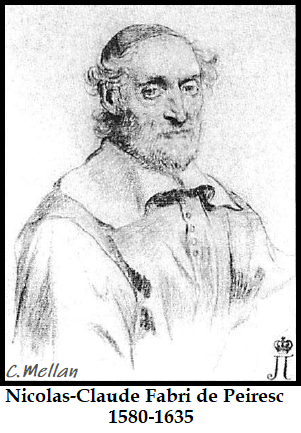
        April 20, 1629 was not a good day for the French polymath and research-sponsor Nicholas-Claude Fabri de Peiresc.  His merchant ship Ambassadrice – a type of small ship known as a polacca – returning from Egypt and carrying miscellaneous antiquities which Pieresc’s agents had obtained there, had inconveniently sunk near Marsamuscetto Harbor in Malta on its return voyage to Marseille, after incurring heavy damage in a storm.  

         Peiresc’s agents, Théophile Minuti and Jacque-Auguste de Thou, wrote to Peiresc that they had managed to recover some items from the shipwreck, including a small box which held an assortment of small relics, coins, and medals, and a vellum codex (which turned out to be a Coptic lectionary) that had survived fairly intact, thanks to the several layers of envelopes in which it had been packaged.  But these were merely souvenirs compared to the other valuable Egyptian antiquities that the ship had been carrying. 

          The disaster of the sinking of the Ambassadrice was greatly regretted at the time – but soon forgotten.  It was not until recently that interest in excavating the remains of the Ambassadrice gained momentum, when Barry  Clifford – the American responsible for the recovery of the wreck of the pirate ship Whydah – was recruited by the government of Malta to explore the wreckage of the Ambassadrice.  What Clifford’s diving expedition found is unique in the history of marine salvage:  inside the remains of several trunks, still sitting on the hull of the wreck, were six large slabs of spermaceti wax (so called because it is extracted from sperm whales).  Apparently someone in Peiresc’s agents’ employ had prepared his materials within the wax as a safeguard against just the thing that had befallen the Ambassadrice. 

          When specialists in the salvage operation carefully heated and removed the wax, they found several items were embedded within, including the manuscripts that Peiresc’s agents had obtained in Egypt 400 years ago.  They are:

           Eight Coptic texts of the Gospels, two of which are in jeweled bindings

          An early Greek-Bohairic lectionary, prefaced by a glossary of rare Bohairic words.

          A Sefer Torah scroll, 

          A hitherto-unknown composition by Dioscorus (bishop of Alexandria during the Council of Ephesus in the 400s), interspersed with supplemental comments by Balatro Aibreán.

           A hitherto-unknown composition by Peter Mongus of Alexandria (late 400s), with many Scripture-citations, and

          An incomplete parchment copy of Breviarium by Liberatus of Carthage (500s). 

    The sixth slab contained four ornate ivory diptychs, with the hinges removed, all carved with scenes from the life of St. Anthony.  With them were numerous Egyptian and North African coins from different eras, a silver aspergillum, a gold and silver buckle inlaid with lapis lazuli, and several amulets and rings.

          The texts recovered from the Ambassadrice are scheduled to be published soon in a yet-untitled open-access book from Brill Academic Publishers, and the other items will be the subject of a series of forthcoming articles in Biblische Zeitschrift.  In addition to an undisclosed payment for his supervision of the underwater salvage operation, Barry Clifford was awarded the Medal for Service to the Republic of Malta.   Addition information about the salvage of the Ambassadrice can be found in Maltese news-articles here and here


Happy April Fools Day 2022!

.


Friday, March 25, 2022

John 6:15 - An Interesting Little Detail

           Near the end of John 6:15 – following John’s account of the feeding of the 5,000 – there is an interesting variant-unit:  did John write that Jesus withdrew again (ἀνεχώρησεν πάλιν) to the mountain by himself, or that Jesus withdrew (ἀνεχώρησεν) (without “again”) to the mountain by himself, or that Jesus “fled again” φεύγει πάλιν) to the mountain by himself?

          John does not use ἀνεχώρησεν anywhere else, so perhaps there is something to be said in favor of φεύγει:  the idea is that copyists changed the wording of Jesus’ movement to avoid giving the impression that Jesus was running away like Brave Sir Robin.  On the other hand, John does not use φεύγει anywhere else, either. 

          Constantine von Tischendorf was willing to let Codex Sinaiticus overrule all other Greek manuscripts in existence in John 6:15, in his eighth edition of the Greek New Testament.  Scholars less entranced with À have not concurred, arguing (as Metzger reports in his Textual Commentary) that φεύγει originated as a Western reading.  It had to be introduced as a sort of paraphrase fairly early, inasmuch as it is supported by Tertullian, De Rebaptismate, Ambrose, Jerome (who placed fugit in the Vulgate, agreeing with several Old Latin copies) and Augustine.  (Tertullian’s reference is not airtight, however:  in On Idolatry XVIII, he simply says that Christ “shrank back from being made a king,” without explicitly quoting John 6:15.)     

          Ἀνεχώρησεν is read in all text-types:  Alexandrian (P75, B, L), Western (D), Byzantine (A, K, Λ, Π, N) and Caesarean (f1).   But did John write only ἀνεχώρησεν or ἀνεχώρησεν πάλιν?  Manuscripts without πάλιν here include W, Δ, Ψ, and most Byzantine copies.  The Peshitta, likewise, does not support πάλιν.  The word could perhaps have been skipped accidentally, if a copyist’s line of sight slid from the ν at the end of ἀνεχώρησεν to the ν at the end of πάλιν.  Or, having just read John 6:3’s account of Jesus going up into the mountain, early copyists couldn’t resist harmlessly adding πάλιν – but one would have to believe this happened at least twice for πάλιν to drift into A, D, Π, N, and Y.    

          The Curetonian Syriac, interestingly, supports a conflate reading:  fled and withdrew again.  

          Readers of the Nestle-Aland Novum Testamentum Graece compilation would never detect that the reading found in the Byzantine Text, W, and the Peshitta exists:  the N-A apparatus mentions the reading in À but not the reading of most manuscripts – an omission that is difficult to explain except as an effect of the editors’ pro-Alexandrian bias.  The UBS apparatus doesn’t mention the non-inclusion of πάλιν either; nor does they Tyndale House GNT’s apparatus.    

          The non-original reading φεύγει is more interesting than it looks – not only because it was temporarily favored by a leading textual critic in the 1800s, but because it reveals that retro-translation sporadically affected the Greek text in the exemplar of the opening chapters of John in Sinaiticus – the same sort of Western phenomenon that has unfortunately affected the NIV 2011’s base-text of Mark 1:41.


Monday, March 7, 2022

The Gangster's Bible: Lectionary 1599

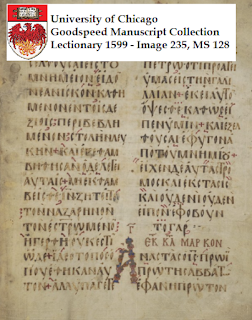
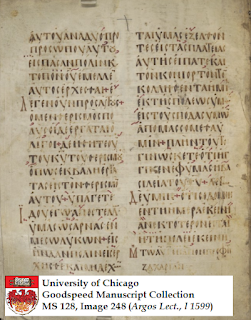
           At the University of Chicago, among the manuscripts that form the Goodspeed Manuscript Collection,  is a medieval lectionary called the Argos Lectionary – named after the ancient city of Argos, in Greece.  Its is also known as Lectionary 1599, or, in the catalog of the collection, MS 128.  But another name is often given to it:  “The Gangster’s Bible.”

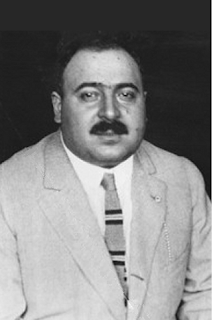
Vincenzo Colosimo
         The story of this moniker begins, as Michael Hirsley reported in the Chicago Tribune in 1993, when, following Edgar Goodspeed’s acquisition of  GA 2400 (an extensively illustrated New Testament made around the 1100s), a student of Goodspeed showed him the Argos Lectionary.  Goodspeed wanted to find out more about it, and this led to a meeting between Goodspeed and one of the owners of Colosimo’s restaurant in Chicago – named after Vincenzo “Diamond Jim” Colosimo, who had been killed – some reports said the killer was John Torrio; others say it was Al Capone – on May 11, 1920. 

          Apparently some of the mobsters in Chicago had a special use for the Argos Lectionary:  it was used as the book on which gang-members took oaths (possibly similar to the oaths described by Michael Franzese).   

          Eventually, with the involvement of Harold R. Willoughby, the University of Chicago purchased the Argos Lectionary from its owner on very agreeable terms, and it took its place in the Goodspeed Manuscript Collection, where it is to this day. 


         Lectionary 1599 was made in the 800s or 900s, and its text is written in two columns per page measuring approximately 29 x 22 cm.   It has endured significant damage, but plenty of pages have survived which contain text from the Gospels.  Its text, like most lectionaries, is essentially Byzantine.  A few textual features may be mentioned:

Image 122:  Luke 22:4 includes και γραμματευσιν, similar to the reading in C, N, P, 157, 700.  

Image 190:  Mark 15:28 is not in the text.

Image 228:  In Matthew 27:55, εκει appears after γυναικες.

Images 134, 135, & 136:  John 13:3-17 follows the end of Matthew 28, and is followed by text from Matthew 26:21.  (This liturgical arrangement for Maundy Thursday explains why, in GA 225, John 13:3-17 is found after after Matthew 26:20.)

Images 235, 236, & 237 – Mark 16:9-20 is the third of the eleven Heothina readings.

Image 242 – In John 21:1, the incipit-phrase (used to begin the reading, in the lower right-hand column 0f text) includes αὐτοῦ ἐγέρθεις ἐκ νεκρῶν, a reading also found in Γ (036)  f13 1241 and 1424.

Image 248 – In Luke 10:8-10, near the end of the first column of text, the scribe made a parableptic error when his line of sight drifted from εἰσέρχησθε καὶ in 10:8 to καὶ μὴ δέχωνται in 10:10.  Also, in Luke 10:11, the text of l1599 includes  (“from your feet”).

Image 261 – In a list of feast-days in October, the saints honored on Oct. 7 are listed as Sergius and Bacchus.  The saint honored on October 8 is listed as Saint Pelagia.  This implies that John 8:3-11 was initially included in the lectionary, before it was damaged.   This arrangement also explains why the story of the adulteress is found in family 13 in Luke 21, shortly after where the reading for Saints Sergius and Bacchus (Luke 21:12-19) is located.  This kind of textual transplant was simply for the convenience of the lector.