Followers

Wednesday, February 4, 2015

A Conflation in John 16:4?

          In John 16:4a, where Jesus warns His disciples about difficult times ahead, there is an interesting textual variant.  In the Byzantine Text, the text means, strictly translated into English:  “But these things I have told you, that when comes their hour, you may remember those things of which I told you.”  
          The Alexandrian Text means something very slightly different:  “But these things I have told you, that when comes the hour, you may remember those things of which I told you.”  The Western Text, as attested by Codex D, has its own variation:  “These things I have told you, that when comes the hour, you shall remember that I told you.”  The Caesarean Text has its own reading too:  “But these things I have told you, that when comes the hour, you may remember that I told you.” 

These four renderings represent the following texts: 

Western:  Ταυτα λελάληκα υμιν ινα οταν ελθη η ωρα μνημονεύτε οτι εγω ειπον υμιν  
Alexandrian:  Αλλα ταυτα λελάληκα υμιν ινα οταν ελθη η ωρα μνημονεύητε αυτων οτι εγω ειπον υμιν
Caesarean (f13):  Αλλα ταυτα λελάληκα υμιν ινα οταν ελθη η ωρα αυτων μνημονεύητε οτι εγω ειπον υμιν
Byzantine:  Αλλα ταυτα λελάληκα υμιν ινα οταν ελθη η ωρα αυτων μνημονεύητε αυτων οτι εγω ειπον υμιν

          I want to focus here on the variant in the middle of the sentence, shown in bold print.  The longer reading, αυτων μνημονεύητε αυτων, looks like a combination of the two shorter readings that are listed before it; that is, this variant appears to be a conflation.  
          It may be helpful to view the data about this variant-unit that is found in the fourth edition of the United Bible Society’s Greek New Testament (page 384).  Setting aside minor variants, the contest is between the following rivals:

Western (D):  μνημονεύτε (altered to μνημονευσητε via an addition above the line; see image, from the online presentation of Codex Bezae at the Cambridge Digital Library.)
Caesarean (f13):  μνημονεύητε αυτων
Alexandrian (B):  αυτων μνημονεύητε
Byzantine:  αυτων μνημονεύητε αυτων


The citation of D* in UBS4 is incorrect.  D* reads 
μνημονευτε, as shown here
            Although Hort did not list this passage as a Western Non-Interpolation, he could have.  The Western reading is shorter here, which might tempt some textual critics to propose that an early copyist, seeking to augment the clarity of the sentence, added αυτων in the margin, and some subsequent copyists placed it before μνημονεύητε, and some other copyists placed it after μνημονεύητε, yielding the Alexandrian and Caesarean readings. 
             In addition, Hort did not list this passage as an example of Byzantine conflation, although he could have:  take the Alexandrian reading (with αυτων preceding μνημονεύητε) and the Caesarean reading (with αυτων following μνημονεύητε) and blend them together, and the result is the Byzantine reading:  αυτων μνημονεύητε αυτων. 
             According to advocates of “reasonable eclecticism,” this sort of thing illustrates the secondary and derivative nature of the Byzantine Text.  When a Byzantine reading looks like a combination of the Western and Alexandrian readings, this (they say) is because the Byzantine reading is a combination of the Western and Alexandrian readings, revealing that the Byzantine Text is essentially an amalgamation of the Alexandrian Text and the Western Text.  

             And now, the plot twist.  Contrary to the impression I have given here up to this point, this variant-unit in John 16:4 illustrates an inconsistency on the part of practitioners of “reasoned eclecticism.”  In the preceding paragraphs, I mixed up the Alexandrian and Byzantine readings.  Reverse the Byzantine and Alexandrian readings as I gave them previously, and you will see the evidence as it actually exists: 

The Alexandrian variant is longer than the Byzantine variant: 
            Codex B (supported, according to Swanson, by 118 124 157 and 1071 and, according to UBS4, by P66vid À2 0233 205 Peshitta, Harklean Syriac, and the lemma of Cyril of Alexandria) reads αυτων μνημονεύητε αυτων. 
            Codex A agrees with B but its orthography is not so good:  αυτων μνημονεύηται αυτων. 
            Codex Θ concurs, but again with a spelling-variation:  αυτων μνημονεύειτε αυτων. 
            Codex Π is a little different, with μνημονεύσητε in the middle, but it still agrees with B by having αυτων both before and after the word. 
   
The Byzantine variant is shorter than the Alexandrian variant:
            Byz (supported by K U Ψ 1582 2c 700 Lectpt tr) reads μνημονεύητε αυτων.
            Ε Γ Δ Λ 565 and 1424 concur, albeit with an itacism:  μνημονεύετε αυτων.  This is listed in UBS4 as a separate variant, with additional support from 1006 1241 1243 1342 Lectpt (l1016 with αυτου).
            Codex 1 stands alone, with a different itacism:  μνημονεύειτε αυτων.
            Codex ﬡ* likewise stands alone with an itacism (also seen in A):  μνημονεύηται αυτων.
            Additional support for the Byzantine reading, according to UBS4:  0141  180 597 (892supp l866 with αυτου) 1010 1292 1505 ff2 Palestinian Syriac Bohpt (arm) (eth) geo slav (Chrysostom).

             
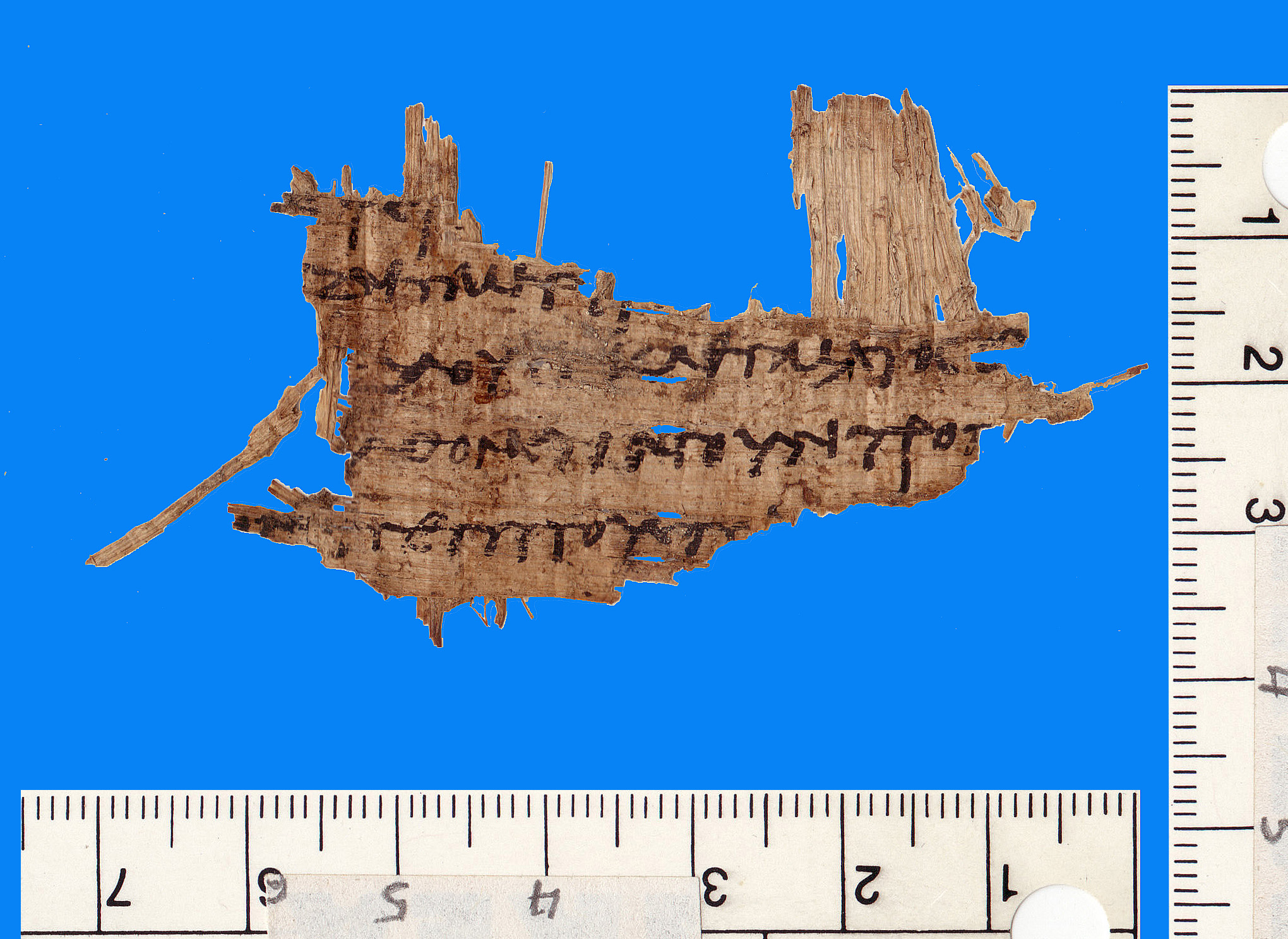
Before we proceed further, we ought to take a closer look at the testimony of Papyrus 66.  As you can see from this image, there is not a lot left of the lower half of the page of P66 that contains John 16:4.  Nevertheless, a calculated guess can be made about whether or not it read αυτων μνημονεύητε αυτων, αυτων μνημονεύητε, αυτων μνημονεύητε, or just μνημονεύητε when it was in pristine condition.
            Here is the Alexandrian Text of John 16:2b-4, formatted to correspond to the array of letters in P66, with sacred names contracted:

λατρείανπροσφέρειντωθωκαιταυ
ταποιήσουσινοτιουκεγνωσαντον
πραουδεεμεαλλαταυταλελάλη
καυμινιναοτανελθηηωρααυτων
μνημονεύητεαυτωνοτιεγωειπον
υμινταυταδευμινεξαρχηςουκ
ειπονοτιμεθ’υμωνημην.

Here is the Alexandrian Text of John 16:2b-4 again – this time with a slightly different array, and without the contraction of patēra

δόξηλατρείανπροσφέρειντωθωΚαι
ταυταποιήσουσινοτιουκεγνωσαντον
πατέραουδεεμεΑλλαταυταλελ
άληκαυμινιναοτανελθηηωρααυ
τωνμνημονεύητεαυτωνοτιεγωει
πονυμινταυταδευμινεξαρχηςουκ
ειπονοτιμεθ’υμωνημην.

Here is the Byzantine Text of John 16:2b-4, formatted to correspond to the array of letters in P66, with all sacred names contracted:

δόξηλατρείανπροσφέρειντωθωκαι
ταυταποιήσουσινοτιουκεγνωσαν
τονπραουδεεμεαλλαταυταλελ
άληκαυμινιναοτανελθηηωρα
μνημονεύητεαυτωνοτιεγωειπον
υμινταυταδευμινεξαρχηςουκ
ειπονοτιμεθ’υμωνημην.

Here is the Byzantine Text of John 16:2b-4 again – this time with a slightly different array, and without the contraction of patēra

ξηλατρείανπροσφέρειντωθωκαιταυ
ταποιήσουσινοτιουκεγνωσαντονπα
τέραουδεεμεΑλλαταυταλελάλ
ηκαυμινιναοτανελθηηωρα
μνημονεύσητεαυτωνοτιεγωειπ
ονυμινταυταδευμινεξαρχηςουκ
ειπονοτιμεθ’υμωνημην.

Here is another configuration of the Byzantine Text, with patēra contracted:

λατρείανπροσφέρειντωθωκαιταυ
ταποιήσουσινοτιουκεγνωσαντον
πραουδεεμεαλλαταυταλελάλη
καυμινιναοτανελθηηωρα
μνημονεύητεαυτωνοτιεγωειπ
ονυμινταυταδευμινεξαρχηςουκ
ειπονοτιμεθ’υμωνημην.

          In this array, the Byzantine Text neatly corresponds to the remains of P66 – but αυτων would fit neatly in the space after ωρα at the end of the fourth line.
         All things considered, it seems probable that P66 contained αυτων both before and after μνημονεύητε when it was in pristine condition.

          It might also be a good idea to take a closer look at Codex Sinaiticus.  No mystery here:  it initially read μνημονευηται αυτων after ωρα, thus disagreeing with Codex Vaticanus and supporting the Byzantine reading.  A later “corrector” has added αυτων in the right margin, to be read immediately after ωρα, thus creating an agreement with B.   

          Now let’s get back to that four-way contest.  Setting aside the lightweights, here again are the heavyweight contenders:
            Western (D):  μνημονεύτε
            Caesarean (f13):  αυτων μνημονεύητε
            Byzantine :  μνημονεύητε αυτων
            Alexandrian:  αυτων μνημονεύητε αυτων

            Nothing stands in the way of conclusion that the Caesarean reading + the Byzantine reading = the Alexandrian reading.  Nevertheless, instead of concluding that a conflation has been made in the Alexandrian Text, the advocates of “reasoned eclecticism” resort to other hypotheses.  
            Metzger asserted (in A Textual Commentary on the New Testament, page 247) that the Alexandrian reading should be accepted “because of the strength of the external evidence (p66vid A B Θ Π* 33) and because αυτων after ωρα was more likely to be removed as superfluous than added by copyists.”  But obviously not all copyists thought along those lines:  if the Caesarean reading was descended from the Alexandrian reading, then some copyists must have chosen to retain the αυτων after ωρα and remove the other one. 
            Before forming a deduction about why copyists did what they did, we should consider the matter of authorial style.  In the Gospel of John, ωρα is used 19 times, but never accompanied by αυτων except here in John 16:4 in the Alexandrian Text.  This consideration thus weighs in against the Alexandrian reading.  Why did this go unmentioned by Metzger? 
           
             John 16:4 is not the only passage where we encounter something that appears to be an Alexandrian conflation.  Let’s take a look at Matthew 3:12.  This variant-unit is not featured in the apparatus of UBS4, although it was included in the apparatus in UBS2 and commented upon by Metzger in A Textual Commentary.  Apparently when a different reading was adopted for UBS3 than what had been in UBS2 (in which the second αυτου is bracketed), someone made a decision to remove the variant-unit from the apparatus.  
            In Matthew 3:12 the rival variants witnesses line up as follows:
            Groucho:  εις την αποθηκην                             ([the wheat] into the barn)
            Chico:  εις την αποθηκην αυτου                      ([the wheat] into his barn)
            Zeppo:  αυτου εις την αποθηκην                     (his [wheat] into the barn)
            Harpo:  αυτου εις την αποθηκην αυτου           (his [wheat] into his barn)
 
            Can you guess which variant is attested by which text-type?  According to the apparatus in UBS2 and Swanson’s volume on Matthew, here are the witnesses’ testimonies (versional witnesses are in blue):

            εις την αποθηκην:  f13 ita itq geo1, A Justin Clement Irenaeus
            εις την αποθηκην αυτου:  E L U 157 892 1195 1253 1424 1646 itb itff1 itg1 Curetonian Syriac, Sinaitic Syriac, Peshitta, Harklean, Armenian, Irenaeus Ambrose Cyril
            αυτου εις την αποθηκην:  ﬡ C Dsupp K M S Δ Ω  f1 2 28 33 565 700 1009 1010 1230 1241 1365 2148 2174 Byz itaur itc itd itf itl Vulgate, Sahidic, Bohairic, Hilary Augustine
            αυτου εις την αποθηκην αυτου:  B W 1071 1216 ethro, pp (ethms? εις την αποθηκην) geoB 

            Although this is the same kind of scenario that is confronted when Byzantine conflations are posited, I submit that in Matthew 3:12 and John 16:4, the Alexandrian Text does not display a true conflation.  (Similarly I do not grant that every Byzantine conflation identified by Hort is actually a conflation, but that’s another subject.)  Instead, it displays the effects of a scribal phenomenon in which a copyist anticipated an approaching word and wrote it twice instead of once – once where it did not belong, and once where it appeared in his exemplar.  In other words, the double-appearance of αυτων in the Alexandrian Text of John 16:4, and the double-appearance of αυτου in the Alexandrian Text of Matthew 3:12, did not originate thoughtfully, but are essentially cases of dittography.  The Alexandrian reading in John 16:4 is not necessarily a conflation, but it is a corruption.

_______________

Postscript: 
Why Is Today’s “Reasoned Eclectic” Base-text
for Bible Versions Becoming Less Eclectic?

            The first English version to reflect the Alexandrian Text of John 16:4a was, as far as I can tell, Granville Penn’s The Book of the New Covenant, published in 1836:  “but these things I have told you, that when their time cometh, ye may remember that I told you of them.”  
            Penn did not have the resources that textual critics have today; he did not even have the resources that Westcott and Hort had when they compiled their revision in 1881.  Instead, as Penn explained in a supplemental volume, Annotations to the Book of the New Covenant, he used the text of Codex Vaticanus as the basis for his revision-work:  “I have taken the continued and entire text of the most ancient surviving manuscript, the “Codex Vaticanus” or Vatican MS., noted 1209 in the Vatican catalogue, and marked B by Wetstein; making it the basis and substance of the revision.”  
            As far as the text of the Gospels is concerned, Penn’s 1836 translation thus echoed Vaticanus (or, the imperfect editions of its text that were available in 1836), except where its readings seemed beyond hope of salvaging.  The compilation of Penn’s base-text was thus determined by the most non-eclectic principle imaginable; he gave Codex B a virtual monopoly of influence.       
            And yet, in 2015, when we examine the “reasoned eclectic” text as it currently exists, and compare it to earlier compilations used in the 1900’s as the base-texts for English translations, its degree of agreement with Penn’s base-text frequently seems to increase rather than decrease.  Consider, for example the text of John 16:4a in the NIV as it existed in 1984 (and as it was still being printed in 2002):
            “I have told you this, so that when the time comes you will remember that I warned you.” (Scripture taken from the Holy Bible, New International Version ®,  Copyright © 1973, 1978, 1984 by International Bible Society.  Used by permission of Zondervan.  All rights reserved.)
            The compilers of the NIV’s base-text apparently adopted the Western reading of John 16:4a. 
            The Contemporary English Version, likewise, seems to follow the Western reading:
            “I am saying this to you now, so that when the time comes, you will remember what I have said.” (Contemporary English Version (CEV) Copyright © 1995 by American Bible Society.)
            The New Century Version, likewise, conforms to the Western reading of John 16:4a: 
            “I have told you these things now so that when the time comes you will remember that I warned you.” (The Holy Bible, New Century Version ®, Copyright © 2005 by Thomas Nelson, Inc.)

            However, in the TNIV and in the new editions of the NIV, the text of John 16:4a is different:
            “I have told you this, so that when their time comes you will remember that I warned you about them.”  [Bold print added for emphasis.]  (Scripture taken from the Holy Bible, New International Version ®, NIV® Copyright © 1973, 1978, 1984, 2011 by Biblica, Inc. ®.  Used by permission.  All rights reserved worldwide.)
            Thus the base-text of John 16:4 in the newly revised NIV has quietly become less eclectic than the NIV of 1984.  The New Revised Standard Version (NRSV), the English Standard Version (ESV), and the Common English Bible (CEB) reflect the same Alexandrian base-text of John 16:4.  It would seem, from this lone example, that although more text-critical materials are available now than ever before (in the form of newly discovered manuscripts, new editions of patristic writings, etc.) “reasoned eclecticism” is producing a text that very closely resembles what Penn produced in 1836 by ignoring almost all evidence except Codex Vaticanus.  In terms of results, it is almost anti-eclectic.


Sunday, February 1, 2015

First-century Mark: A Timeline

Are you braced for the impact of the Green Scholars Initiative’s work on newly discovered New Testament papyri?  The most famous (or infamous) of these papyri is a fragment from the Gospel of Mark which has been assigned a production-date in the first century – but there are several important papyri among the documents which are scheduled to be published – hopefully – within a year.  Maybe two.  Or three.  In the meantime, here’s a timeline of events leading up to this eventual important event. 

Late 1970’s-1990’s – Jaakko Frösén (Philology professor at the University of Helsinki) develops methods to extract literary papyri from cartonnage.  A video of his conservation-technique is accessible at http://www.helsinki.fi/hum/kla/papupetra/papyrus/cartonnage.html .  (You may need an up-to-date version of RealPlayer to watch the video.)

August 9, 2007 – Robert A. Kraft (currently the Berg Professor of Religious Studies, Emeritus, at the University of Pennsylvania) expands his report on the appearance on eBay of papyrus fragments extracted from mummy cartonnage, at http://ccat.sas.upenn.edu/rak/papyri/ebay/report-2007/report-frame.html and
http://ccat.sas.upenn.edu/rak/publics/papyri/pKraft/studies/cartonnage.html
A papyrus fragment, from Dr. Kraft's report
Kraft’s report, Studies in the (Mis)uses of Papyrus Cartonnage, and Recovery/Conservation of Its Layers, shows that readable papyri are being extracted from cartonnage, as shown by the example at http://ccat.sas.upenn.edu/rak/publics/papyri/pKraft/images/cartonnage/078-2w-scan.jpg .

March 30, 2010 – Hobby Lobby founder and CEO David Green discusses the Green Collection and the plans for a Museum of the Bible.  (At the time of the interview, Dallas was the planned location of the Museum of the Bible, but that has changed; it is being constructed in Washington, D.C.)  Codex Climaci Rescriptus, previously housed at Westminster College, Cambridge, is among the items in the collection.

Scott Carroll
November 6, 2010 – Scott Carroll, at https://www.youtube.com/watch?v=QAnAKKJ7mCs , describes his philosophy of Christian scholarship.  The video includes footage of manuscripts and artifacts.

Codex Climaci Rescriptus (0250)
May 19, 2011 CBN reports (at https://www.youtube.com/watch?v=B4L_TP6O_Q4 ) about Scott Carroll, the rapid growth of the Green Collection, and plans for the Museum of the Bible.  The reporter states that the Green Collection already contains over 30,000 items.  Several collection-items are in view in the report, including a Dead Seas Scroll fragment, an illustrated Ethiopic codex, and Papyrus 37.  At about 2:55, pages of the Codex Climaci Rescriptus are featured.  Dr. Carroll describes it as the fifth-oldest near complete Bible in the world.  He also claims, “The handwriting betrays that it actually was copied from something in the 100’s.”

Summer 2011 Baylor Magazine describes “an unconventional research project” in which exterior mummy-coverings were “dissolved” and in which “More than 150 papyri texts” were extracted.  The report mentions that the Green Collection “provided the items for the study.”  The report names Scott Carroll as the “principal investigator” of the research; specialists involved in the research include David Kyle Jeffrey and Jeffrey Fish. 

Fall 2011 – In a newsletter of Baylor University, Scott Carroll’s work on manuscript-extraction from mummy cartonnage is described.  Jeff Fish was interviewed for the report:  “One day I received a call on the phone from Dr. Scott Carroll, who told me about a vast new collection of unedited papyri. . . . I have since found that Byron Johnson, director of Baylor’s Institute for the Study of Religion, was instrumental in getting Baylor involved with the Green Scholars Initiative.”

November 27, 2011 – Scott Carroll, known to be acquiring artifacts and manuscripts for the rapidly growing Green Collection, states on Twitter:  “Finished exhibit and lectures in West Africa with over 21,000 registered.  Now in Istanbul looking at a collection of unpublished papyri.”  Later the same day:  “My eyes feasted on classical texts, royal decrees, and Biblical and Gnostic texts; nearly 1,000 papyri hidden in this private treasure-trove.”

December 1, 2011 – Scott Carroll states on Twitter:  “For over 100 years the earliest known text of the New Testament has been the so-call John Rylands Papyrus. Not any more.”  [The John Rylands Papyrus to which he refers is P52.]  On Facebook, Carroll states:  “For over 100 years the earliest-known text of the NT has been the so-called John Rylands papyrus.  That is about to change with a sensational discover[y] I made yesterday.  Stay tuned for the update.”

February 1, 2012 – Daniel Wallace mentions the existence of “a fragment from Mark’s Gospel that is from the first century” during a debate with Bart Ehrman about the reliability of the New Testament text.  The debate is online at https://www.youtube.com/watch?v=kg-dJA3SnTA&feature=youtu.be (uploaded to YouTube on February 13, 2012).  One hour and 13 minutes into the debate, Dr. Wallace mentions the existence of the first-century fragment of Mark: 

“In the last few months several very early fragments of the New Testament have been discovered.  These will be published by an international scholarly publishing house in a book one year from now. . . .  Among the finds was also a fragment of Luke that is from the early second century. . . .  The oldest manuscript of the New Testament is now a fragment from Mark’s Gospel that is from the first century. . . . How accurate is the dating?  Well, my source is a papyrologist who worked on this manuscript – a man whose reputation is unimpeachable.  Many consider him to be the best papyrologist on the planet.  His reputation is on the line with this dating, and he knows it, but he is certain that this manuscript was from the first century.”

February 15, 2012 – Ben Witherington III (New Testament professor at Asbury), after a lecture by Scott Carroll at Gordon-Conwell Theological Seminary – Charlotte, writes at his blog (at http://www.patheos.com/blogs/bibleandculture/2012/02/15/the-ripening-of-the-green-collection/ ), “ The brief lecture by Scott Carroll at GCTS Charlotte last Friday night highlighted some of the most exciting aspects of the Green Collection. It is possible that a very early copy of the Gospel of Mark in Greek, possibly the very earliest is a part of this collection. An epigrapher from Oxford has already prepared to say that it is a first century copy!”  (Witherington also notes, “Sadly it does not include Mark 16.”)

[It so happens that Dirk Obbink is a papyrologist who works at Oxford.  He has been working with Jerry Pattengale (who is currently the Green Scholars Initiative’s Executive Director of Education) as General Editor for the Brill Papyrus Series, in which, it is hoped, the first-century papyrus fragment will be published, along with the other early manuscripts Scott Carroll has described.]

Daniel Wallace
February 24, 2012 – Hugh Hewitt’s interview of Daniel Wallace is published at
http://www.hughhewitt.com/new-testment-scholar-daniel-wallace-on-the-gospel-of-mark-discovery-and-other-biblical-papyri-with-it/ .  Near the beginning of the interview, Wallace states:  “First of all, there is a fragment of Mark, and it’s a very small fragment, not too many verses, but it’s definitely from Mark.  
And the most amazing thing about this is that it’s from the first century.  We don’t have any other New Testament manuscripts that are written within the same century that the Gospels and the rest of the New Testament were written in.  This is the first. And it’s dated by one of the world’s leading paleographers, whose name I’m not allowed to reveal yet.”

Asked for an “absolute last date” when the newly discovered fragments will be published, Wallace states, “I have been told that a book should be out, a multi-author book, should be out early next year.  Now publishers sometimes take longer.  Scholars sometimes take longer.  So I’m not going to bet anything on that. But I’m pretty darned confident 2013 is going to be the year all of this is going to be published.” 

March 22, 2012Daniel Wallace posts the following at his blog:  “At my debate with Bart Ehrman (1 Feb 2012, held at UNC Chapel Hill) over whether we can recover the wording of the New Testament autographs, I made the announcement that a probable first-century fragment of Mark’s Gospel had been recently discovered. I noted that a world-class paleographer had dated this manuscript and that he was pretty darn sure that it belonged to the first century. All the details will be coming out in a multi-author book published by E. J. Brill sometime in 2013.”  And, “When the fragment is published along with six other early New Testament papyri (all from around the second century), the scholarly vetting will do its due diligence.”

April 6, 2012Bart Ehrman, at his blog, expresses some frustration about the secrecy surrounding the first-century papyrus fragment of  first-century papyrus of Mark:  “I don’t understand why there is so much secrecy about this “manuscript.” Why NOT tell us where it was found, who found it, how extensive it is, who has examined it, what his grounds for dating it were, whether his views have been independently corroborated?”   

 August 13, 2013 – Updates are made to the Bibliographical Test Update (which is accessible at 
Recto:  Mt. 6:33 Verso:  Mt. 7:4
https://s3.amazonaws.com/jmm.us/Bibliographical+Test+Update+-+08.13.14.pdf ).  Items are added to the list of Coptic New Testament manuscripts and Greek New Testament manuscripts.  Photos of some fragments are included; however, even though “The photos have been purposely obscured to protect copying of manuscripts before their publication,” some of them have a modicum of usefulness, such as a photo of a Coptic fragment containing text from Matthew 6:33 and 7:4.  Another photo shows a Coptic fragment with text from First John 2:21. 

Beginning on page 23 of the Bibliographical Test Update, there is a report of the contents of non-Biblical papyri from the second century B.C., extracted from a mummy-mask that is not the same mask that was featured in McDowell’s video.

Text:  First John 2:21
(from the Bibl. Test Update)
September 6, 2013 – A presentation given by Scott Carroll at the University of the Nations is uploaded to YouTube (at https://www.youtube.com/watch?v=CSUzWsuLpso 2013  UofN WS: S11 Dr. Scott Carroll).  In the course of this video, Carroll describes the process that was used to extract literary papyri from mummy cartonnage.  Things get interesting about 23 minutes into the video.  (At 25:04, bottles of Palmolive are visible in the background as a mummy-mask is being prepared for deconstruction in a sink.  This appears to be the same extraction-method that was presented by McDowell.)  Carroll makes the following statements:
Min. 28:  Carroll announces his discovery of the earliest known text of Romans, lost works of Sappho, and “tons of Homer.”
Min. 29:  Carroll describes the multi-spectral imaging technology that is being used to read the underwriting of Codex Cimaci Rescriptus.  Other subjects are also covered, such as the use of lasers to recover text by measuring the microscopic imprint of the stylus where no ink has survived on the page.
Min. 33:  Carroll mentions that a text of Euripides has been recovered.   
Min. 36:  Carroll mentions that he has (there in the room) the earliest text of Exodus 24.
Min. 37:  Carroll states that texts from “many of the Old Testament books,” have been discovered, “with New Testament books,” – “including a first-century text of the Gospel of Mark.  That will be the earliest text of the New Testament.”
Min. 38:  Carroll states, “We’re looking now at a text of Mark that dates between 70 and 110.  And there’s even something more important than that, that I’ve not even told David Hamilton.  And I’m not going to.”
Min. 39:  Carroll displays a Powerpoint-graphic with a list of manuscripts, including: 
            22.  Gospel of Mt c. 140
            23.  Mt 6 mid-2c
            24.  Gospel of Mark late 1c-early 2c
            25.  Gospel of Luke mid-2c
            26.  Gospel of Luke mid-to-late 2c
            27.  John 8 early-3c
            29.  Early 4c fragment of John 3 in Coptic
            30.  Acts 19 in Coptic
            31.  Romans early-3c.
The next slide includes:
            32.  Romans 14 early 4c papyrus in Coptic
            33.  I Corinthians 9 mid-2c
            35.  Codex quire of 2 Corinthians and Galatians 4c in Coptic
            36.  Ephesians 4 Coptic
            37.  Hebrews 9 early-3c
            38.  Hebrews 11 mid-2c (the earliest text of Hebrews)
            39.  2 Timothy 3 papyrus (only surviving evidence for the epistle)

In the course of describing these items and others, Carroll mentions the existence of an ancient fragment that is a portion of Matthew 27-28 and “The earliest text in the world of Luke 16,” “the earliest text of Timothy,” a manuscript containing Second Corinthians chapter 6 through Galatians 3 (which would necessarily be several pages long), “The earliest text in the world of Genesis 17,” and “The earliest text of Second Kings 9.”  Referring to a text of First Samuel, Carroll states, “This text came from a mummy mask,” and says that it was found along with a fragment of the Iliad.

Min. 51:  Carroll refers to a fragment of Matthew 12 which will be the second-earliest New Testament manuscript when it is published, to a fragment of Matthew and Luke “dating to around 150,” to the earliest surviving manuscript of Luke 2, “dating to around 140,” and to a fragment of Luke 12, “dating to before 200.”

Other items mentioned in Carroll’s description of the newly discovered manuscripts:  “The earliest text of Acts 19,” the “earliest text of Romans, found in a mummy mask,” “earliest of Romans 14,” and the “earliest copy of any of Paul’s writings – First Corinthians 9.”  He seems to say that last-mentioned item (a manuscript of First Corinthians 9) was produced in 140 to 160, and was found in a box.  [Therefore we ought to keep in mind that some of the new finds are not from mummy cartonnage!]

 March 24, 2014 – Josh McDowell, in a lecture (online at http://vimeo.com/62646535 ) given at Gracespring Bible Church, describes an experience at the Discover the Evidence seminar (which took place Dec. 5-6, 2013) at which a mummy-mask was deconstructed to obtain literary papyri that were among its component-parts. 
Josh McDowell
Beginning in the 26
th minute of the video, the deconstruction of the mummy-mask is clearly shown:  it is submerged in a sink at specific temperature-levels, a gentle detergent (Palmolive) is applied, the material is massaged, and then the layers of papyri are gently separated.  This results in the destruction of the artwork on the surface of the mask.  In the 28th minute of the video, McDowell mentions that “three classical scholars” were involved in the identification of texts derived via this method of papyrus-extraction.  (Footage of the mask-deconstruction and papyrus-extraction is at  https://www.youtube.com/watch?v=j_gwgGcpD1M .)
  
The Discover the Evidence seminar is described at http://www.josh.org/discover/ .  The webpage includes detailed bios of Scott Carroll (Ph.D., Miami UniversityOhio) and Josh McDowell (M.Div., Talbot Theological Seminary).

April 23, 2014 – [Unverified Data] Josh McDowell, in a lecture at Wheaton Bible Church, refers to some new manuscript-discoveries.  At about one hour and 12 minutes into the video (formerly at http://vimeo.com/92964208 but no longer available), according to a comment at a blog, McDowell stated that the text of the fragment is from the first chapter of the Gospel of Mark.  (This was reported by comment-contributor Jeff at the blog of Brice C. Jones on May 5, 2014, at http://www.bricecjones.com/blog/the-first-century-gospel-of-mark-josh-mcdowell-and-mummy-masks-what-they-all-have-in-common .)

May 5, 2014 – Tommy Wasserman, at the Evangelical Textual Criticism blog, using information from Brice C. Jones, posts photos of some of the manuscripts featured in Josh McDowell’s video.  One of the photos is of a fragment containing First Corinthians 10:1-6.  Peter Head (who currently is a scholar involved in the Green Scholars Initiative, according to the list at http://www.greenscholarsinitiative.org/scholars-staff  ) refers to McDowell’s “outlandish claims” and describes the process of papyri-extraction as “slapdash” and “deplorable.”  Wasserman (who is also currently a scholar involved in the Green Scholars initiative) concurs, briefly stating, “Slapdash is the word.”

May 7, 2014Paul Barford offers a collection of online articles and videos related to the papyrus manuscripts that have been obtained via extraction from mummy-cartonnage.  The heading:  “US Christian Apologist Fanatics Destroy Ancient Artefacts.”    

May 15, 2014 – Jerry Pattengale, in a video at https://www.youtube.com/watch?v=DLCNIZ3z_vk , describes the work of the Green Scholars Initiative, as well as plans for the opening of the Museum of the Bible in Washington, D.C. in 2017.  

September 13, 2014 – Dorothy King compares Josh McDowell to the Taliban in a blog-post at   
http://phdiva.blogspot.com/2014/09/i-come-to-bury-green-not-to-praise-him.html , stating, “If islamic fundamentalists destroy cultural property to propagate religious propaganda – whether it’s the Taliban or ISIS – we’re metaphorically up in arms.  Why do we treat Christian fundamentalists differently? Why do we make allowances for the Green Collection scholars destroying ancient Egyptian mummies?  If this ain’t religious discrimination, I don't know what is.” 

 November 7, 2014 – Michael Holmes, the compiler of the SBL-GNT, becomes the Executive Director of the Green Scholars Initiative.  

December 5, 2014 - Scott Carroll appears in a chapel-service at Dallas Theological Seminary (where Dan Wallace is a professor), online at https://www.youtube.com/watch?v=htXrOgDahAQ , beginning at about 23 minutes into the video.  His title, in a caption in the video, is “Director, Manuscript Research Group, Grand Haven, MI.”

December 7, 2014 – Roberta Mazza, who has repeatedly expressed candid dismay about the operation of the Green Scholars Initiative’s research and manuscript-acquisitions on her blog, requests a presentation of “acquisition documents” for the mummy-mask that was the source of papyri depicted by Josh McDowell, in a blog-post at https://facesandvoices.wordpress.com/2014/12/07/josh-mcdowell-scott-carroll-and-the-green-collection/ .

January 9, 2015 – Dirk Obbink releases information on newly discovered texts of Sappho, including a statement that these particular fragments were not obtained from mummy cartonnage.  In his report (which includes photos), Obbink refers to the material as “industrial papyri,” and offers a guess that it existed as a book-binding.  [However, I note that his basis for this is that “none of the fragments showed any trace of gesso or paint prior to dissolving or after.”  It seems to me that this does not preclude an origin in mummy cartonnage; it only implies that the fragments were not from its outer layer or layers.]  He mentions that his fellow-researchers included Simon Burris and Jeffrey Fish.  [These may be the “three classical scholars” alluded to by Josh McDowell in his 2013 lecture.] 

Scheduled for 2017:  the opening of the Museum of the Bible.  The museum has a website at http://www.museumofthebible.org .  Passages, a traveling exhibit featuring items from the Green Collection, continues to draw public attention to the collection.  The current director of the museum’s collections is David Trobisch.  Dr. Trobisch is currently listed online as a Fellow of the Center for Inquiry at http://www.centerforinquiry.net/jesusproject/fellows/trobisch_david ; interestingly, the stated mission of the CFI, as stated at http://www.centerforinquiry.netabout , is “to foster a secular society based on science, reason, freedom of inquiry, and humanistic values.”  [This seems very different from the candid Christian commitment that has been expressed by Dr. Carroll.  It also seems diametrically opposed to the priorities of the Green family.]  

[UPDATE:  July 14, 2017:  footage comes to light of a discussion between Josh McDowell and Scott Carroll, from November of 2015, in which Carroll confirms that Dirk Obbink is the papyrologist studying the manuscript, that he (Carroll) has seen the manuscript twice, that the Green Collection does not own the manuscript, and that Obbink has assigned a tentative production-date for it between A.D. 70 and 120.]

____________________


That about covers it.  We are still awaiting the publication of the first-century papyrus of the Gospel of Mark; I expect that it will be published by Dirk Obbink (perhaps along with Jeffrey Fish) in late 2015 or 2016, and that it will turn out to be a small fragment with text from Mark chapter one.  It is very possible that some of the other fragments to be published in the same series, which is expected to be prohibitively expensive, will turn out to make a much more significant text-critical contribution than the Mark fragment.  (Note to the GSI and Brill:  affordable digital copies would be a nice compensation for making everyone wait so long!) 


Friday, January 30, 2015

The Text of Reasoned Eclecticism: Is It Reasonable and Eclectic? - Appendix

Differences in Matthew 1-10 
Between Westcott & Hort’s 1881 Greek text
and the 26th/27th edition of Nestle-Aland

= An adopted reading not read by B or ﬡ.
Highlighted readings are adopted readings not read by B, ﬡ, or D, and which are not bracketed.

● 1:9 – NA reads Αχαζ, agreeing with B, instead of Hort’s Αχας, which agrees with ﬡ. 
1:18 – NA removes the brackets that Hort placed around Ιησου, which is included by ﬡ.  (B has a transposition.)
1:24 – NA removes the brackets that Hort placed around ο (before Ιωσηφ), solidifying the reading of B.
1:25 – NA removes the brackets that Hort placed around ου (before ετεκεν).  The word is absent in B but present in ﬡ.
3:2 – The opening word και, absent from B and ﬡ, has been adopted, in brackets.
3:7 – αυτου, after βαπτσμα, has been adopted, although it is absent in B and À
3:14 – Ιωαννης has been added, although it is absent in B and ﬡ.  Inclusion is supported by P96.  
3:15 – NA reads προς αυτον (with P64 and ﬡ) instead of αυτω (with P96 and B).
3:16 – NA reads αυτω, in brackets, although the word is absent from B and ﬡ.
3:16 – NA reads το, in brackets, before πνευμα, although the word is absent from B and ﬡ.
3:16 – NA reads του, in brackets, after πνευμα, although the word is absent from B and ﬡ.
3:16 – NA includes και, in brackets, before ερχόμενον, although the word is absent from B and ﬡ.
● 4:1 – The brackets that Hort placed around ο (before Ιησους) have been removed.  The article is in ﬡ but not in B.
● 4:3 – Where Hort had ειπον (after θεου), agreeing approximately with ﬡ (which reads ειποιν), NA reads ειπε, agreeing with B.
4:16 – Instead of σκότια (supported by B), NA reads σκότει (supported by ﬡ).
4:24 – NA includes και, in brackets, after συνεχομένος.  (The word is absent from B but present in ﬡ.)
● 5:1 – NA removes the brackets around αυτω, which is not in B but present in ﬡ.
● 5:9 – NA removes the brackets around αυτοι, which is not in ﬡ but present in B.
5:11 – NA added brackets around ψευδόμενοι.
5:18 – NA removes the brackets around αν, which is not in B but present in ﬡ.
5:28 – NA removes the brackets around αυτην, which is not in ﬡ but present in B.
5:32 – NA removes the brackets around the final phrase of the verse.
● 6:8 – NA does not include ο θεος, which was bracketed by Hort.  Inclusion is supported by B; non-inclusion is supported by À.
6:15 – After ανθρώποις, Hort included τα παραπτωματα αυτων in brackets, supported by B and Byz, but NA does not include the phrase.  (Non-inclusion is supported by ﬡ.)
6:21 – NA removes the brackets around και, which is not in B but present in ﬡ.
6:33 – NA includes του θεου in brackets. ﬡ does not have the phrase; B has, instead, των ουρανων.
● 7:9 – NA includes εστιν, which is not in B but present in ﬡ.
7:13 – NA includes η πυλη, which is not in ﬡ but present in B.
7:14 – NA reads τι at the beginning of the verse, instead of Hort’s οτι (supported by ﬡ) or οτι δε (supported by B).
7:18 – NA adopts ποιειν, agreeing with B, instead of Hort’s ενεγκειν, which agrees with ﬡ.
7:24 – NA removes the brackets around τούτους, which is not in B but present in ﬡ.
● 8:7 – NA includes και at the beginning of the verse; the word is not in B but present in ﬡ.
8:8 – NA reads και αποκριθεις instead of αποκριθεις δε, which is supported by B and ﬡ.
8:9 – NA does not include τασσομενος, which Hort included in brackets.  Inclusion is supported by B and ﬡ. 
8:13 – NA includes αυτου, in brackets, after παις, although non-inclusion is supported by B and ﬡ.
8:21 – NA includes αυτου, in brackets, after μαθητων, although non-inclusion is supported by B and ﬡ.
8:23 – NA includes το before πλοιον; inclusion is supported by B; non-inclusion is supported by ﬡ.
● 9:4 – NA adopts ιδων instead of Hort’s ειδως.  B reads ειδως; ﬡ reads ιδων.
● 9:6 – NA adopts εγερθεις instead of Hort’s εγειρε.  B reads εγειρε; ﬡ reads εγερθεις. 
9:14 – NA includes πολλα, in brackets; B and ﬡ support non-inclusion.
9:18 – NA removes the brackets around εις, which is not in ﬡ but is included in B.
9:18 – NA reads ελθων instead of Hort’s προσελθων, which is supported by B and ﬡ. 
9:19 – NA reads ηκολούθησεν, agreeing with B, instead of Hort’s ηκολούθει, which agrees with ﬡ.
9:27 – NA includes, in brackets, αυτω, agreeing with ﬡ, instead of Hort’s non-inclusion which agrees with B.
9:27 – NA reads υιος, agreeing with B, instead of Hort’s υιε which agrees with ﬡ.
9:32 – NA reads ανθρωπον, although non-inclusion is supported by B and ﬡ.
9:34 – NA removes the brackets around the verse.
10:13 – NA, after the second occurrence of ειρηνη υμων, reads προς instead of εφ.  B and ﬡ support εφ.   
10:23 – NA, after πολεις, removes the brackets around του, which is not included by B but is present in ﬡ.  
10:23 – NA includes αν, which B and ﬡ do not include.
10:28 – NA reads, as the third word in the verse, φοβεισθε, agreeing with ﬡ, instead of Hort’s  φοβεθητε which agrees with B.
10:28 – NA reads αποκτεννοντων, agreeing with ﬡ, instead of Hort’s αποκτεινοντων, which agrees with B. 
10:32 – NA adds brackets around τοις, which is included by B but not by ﬡ.
10:33 – NA adopts δ’ αν, agreeing with ﬡ, instead of Hort’s δε.
10:33 – As in the previous verse, NA adds brackets around τοις, which is included by B but not by ﬡ.

_______________

The Text of Reasoned Eclecticism: Is It Reasonable and Eclectic? Part Four of a Four-Part Response to Dan Wallace

Testing Reasoned Eclecticism

            Wallace attempts to separate his “reasoned eclectic” position from the pro-Alexandrian view of Westcott and Hort.  He stated that the Westcott-Hort theory has “many flaws.”  However, as Eldon Epp has observed, the Nestle-Aland text “almost always departs from the B-text only when an À versus B attestation is in question.”29  If the methodologies of Nestle-Aland and Westcott-Hort are so different, why are their results so similar?  How is it that the Nestle-Aland text differs at only 558 points from a text that was based on a theory with “many flaws”?30  
            Wallace describes the Nestle-Aland text as much more eclectic than the Westcott-Hort text, noting that “In scores of places the editors of the modern critical texts have adopted a Byzantine reading against an Aleph-B alignment (contra Hort).”  But what do these changes really constitute? 
            There is a way to find out:  sift through Wieland Willker’s online presentation of the Westcott-Hort text, which parenthetically displays the readings of NA27 where they diverge from WH-1881.  What differences have emerged in, say, the first ten chapters of Matthew?  A total of 55 differences, which are listed in the appendix of this article (in the post that follows this one).
            Seventeen of these changes, however, are not textual, but only consist of the addition or removal of brackets.  Of the remaining 38 changes, most of them do not make the text any more eclectic than Hort’s text, because they only consist of exchanging a reading in ﬡ for a reading in B, or a reading in B for a reading in À.  Only 17 changes in Matthew 1-10 actually make the text of NA26 more eclectic than Hort’s text, and of these 17 (indicated by red dots in the list in the appendix), eight are bracketed in NA26.  The only newly adopted readings not supported by either ﬡ or B, and also not displayed in brackets, are the following:     
           
● 3:7 – αυτου, after βαπτισμα, has been adopted, although it is absent in B and À.
3:14 – Ιωαννης has been added, although it is absent in B and À.  Inclusion is supported by P96.
● 8:8 – NA reads και αποκριθεις instead of αποκριθεις δε, which is supported by B and À.
● 8:9 – NA does not include τασσομενος, which Hort included in brackets.  Inclusion is supported by B and À.
9:18 – NA reads ελθων instead of Hort’s προσελθων, which is supported by B and À.
9:32 – NA reads ανθρωπον, although non-inclusion is supported by B and À.
10:13 – NA, after the second occurrence of ειρηνη υμων, reads προς instead of εφ.  B and À support εφ.  
10:23 – NA includes αν, which B and À do not include.

            The confidently presented (i.e., not bracketed) “reasoned eclectic” text of Matthew 1-10 is more eclectic than Hort’s 1881 text – by a margin of four additions, one subtraction, and three substitutions.  In four of these eight cases (specifically, in 3:7, 9:32, 10:13, and 10:23) the adopted reading is supported by Codex D, and thus does not represent the adoption of a reading distinct to the Byzantine Text.  Thus the distinctly Byzantine contribution to the non-bracketed Nestle-Aland text of Matthew 1-10 amounts to one addition, two substitutions, and one subtraction (and the subtracted word was already bracketed by Hort).
            That’s next to nothing.  The results of “reasoned eclecticism,” as practiced by the compilers of Nestle-Aland, and by Wallace, are virtually the same text that Hort produced.  Why do they so persistently reject the Byzantine Text?  The answer is obvious:  against all evidence to the contrary, they are still entrenched in the belief that the Byzantine Text is a blend of Alexandrian and Western readings that were combined by an editor around 300.  In other words, they still adhere to Hort’s theory that the Byzantine Text originated with the Lucianic Recension, as Wallace shows when he states that the Westcott-Hort theory “was apparently still right on its basic tenet:  the Byzantine texttype—or majority text—did not exist in the first three centuries.”  
            Is that a reasonable assumption? 
            By the early 400’s, the Byzantine text of the Gospels, or a substantial strata of it – a text that resembled the Byzantine Text far more than any other text-type – had been used by Wulfilas, Basil, Chrysostom, and the unknown translator(s) of the Peshitta.  It was also being disseminated in copies such as Codex A and Codex W.  In the 500’s, a similar text was used for the Purple Uncials (N-O-Φ-Σ). 
            What was happening in the areas where these writers lived?  Although we do not have copies of the Greek New Testament from Syria, Asia, and Greece before 300 – because they were made of papyrus, and those that were not victims of Roman persecutors became victims of high humidity – it should go without saying that the Greek-speaking Christians in these areas possessed copies of New Testament books, and routinely used them in their church-services.  Did the people in those areas simply set aside their old Greek texts – Alexandrian, or Western – and pick up a new Greek text – the Byzantine Text – that was brimming with new readings? 
            The idea is inherently improbable.  Such an act would not be analogous to what happened around 425 in Syria, when Theodoret replaced 200 copies of the Diatessaron with copies of the separate Gospels.  Theodoret was replacing the work of Tatian, who – rightly or wrongly – had acquired a reputation as a heretic, with the work of apostles and their associates.  The churches of Syria had a strong theological motive to accept Theodoret’s gift as an improvement, and to set the Diatessaron aside, regarding it as a dubious proxy.  But on what basis would a newly introduced Greek text of the Gospels (or of the entire New Testament), never before seen, be favored – and rapidly favored – over the Greek text of the Gospels that had been used in these areas for generations, and which those preceding generations had risked their lived to protect and preserve?
            Instead of assuming that the local text of Antioch, Asia, and Greece that was being used in the 200’s was suddenly abandoned in the 300’s, it is more reasonable to deduce that the Byzantine Text – or at least a very large part of it – was the local text of Antioch, Asia, and Greece in the 200’s, and that is why it continued to be the local text of those areas in the 300’s and 400’s.  As other text-types infiltrated the area, conflations occurred, but only rarely.  The amount of conflation (or apparent conflation) that Hort proposed was on display in the Byzantine Text is not materially greater than what one observes in early Alexandrian witnesses.31        
            A handful of conflations (in which a proto-Byzantine reading was combined with either an Alexandrian or Western reading) sprinkled over a strata of earlier text should not be considered a sufficient reason to regard the entire text-type as late. 
            Even early manuscripts such as P53 and P66 contain apparent conflations – and, occasionally, the early papyri contain distinctly Byzantine readings, that is, readings that are found in the Byzantine Text which are not found in the flagship manuscripts of the Western or Alexandrian texts.  A sample of these, from data provided by Harry A. Sturz,32 may be provided:  P45 agrees with the Byzantine Text in the Gospel of Mark, disagreeing with ÀB and D, in 5:22, 5:42, 6:2, 6:16, 6:45, 6:48, 7:12, 7:30 (twice), 7:31, 7:32, 7:35 (twice), 7:36, 9:6, 9:20 (twice), 12:6, and 12:16.  Sturz proceeds to list 26 agreements in Luke between early papyri and the Byzantine Text that disagree with ﬡB and D, and 44 agreements in John between early papyri and Byz that disagree with ﬡB and D. 
            Wallace seems to believe that every one of these Byzantine readings entered the early papyri out of nowhere.  Why not regard them, or at least some of them, as results of mixture with a local text that was infiltrating Egypt in the early 200’s?33  

Conclusion

            One does not have to adhere to the notion that the Byzantine Text was the majority text in the 200’s to grant that a substantial strata of the Byzantine Text was the local text of Antioch and Asia in the 200’s.  All one has to grant is the inherently probable premises that (a) the Greek text in Antioch and Asia did not develop along exactly the same lines in which it developed in the regions where the Western and Alexandrian texts dominated, and (b) when copyists made the shift from papyrus to parchment in Antioch and Asia, they did not set aside their most ancient, most respected local exemplars, but continued to use the same form of the New Testament text that previous generations had been using in their area, with only a minimal amount of accretions.     
            If these premises were accepted, instead of the premise that the Byzantine Text did not exist at all until the 300’s, then text-compilers might conceivably give Byzantine readings the hearing that they deserve, instead of reaching for whatever hypothesis (often the assertion of intentional corruption) is required to dismiss the Byzantine reading and maintain the Alexandrian reading, even when it is easily attributable to scribal carelessness.  Then, and only then, will it be possible to compile a Greek New Testament based on truly reasonable premises, with truly eclectic results. 

●●●●●●●

_______________

FOOTNOTES

29 – See page 136 of Eldon Epp’s article, A Continuing Interlude in New Testament Textual Criticism? in Harvard Theological Review, Vol. 73, 1980.)  Epp raises an important question:  today’s textual critics (“today” being 1980, when he wrote – his point is even more cogent now) have “more than 80 papyri, more than 200 additional uncials, more than 2600 additional minuscules, and perhaps 2000 additional lectionaries that were unavailable to or were not utilized by Westcott-Hort.”  Why, so far, has it made so little difference?
30 – According to the statistics presented by Michael Marlowe at http://www.bible-researcher.com/stats.html , there are 551 differences between the 1979 Nestle-Aland text and the 1881 text of Westcott & Hort.  Slight fuzziness in the statistic may be due to different treatments of bracketed words in both texts.  As a peripheral point, it should be noted that some of those 558 differences exist because the compilers of the Nestle-Aland text – or at least a majority of the compilers – rejected Hort’s occasional preference for Western readings (the most famous examples being the “Western Non-Interpolations” in Luke 24).  Each time the compilers rejected a Western reading that Hort had favored, the resultant compilation became less eclectic and more Alexandrian.
31 – If one carefully sifts through Pickering’s Appendix D – Conflation or Confusion? in The Identity of the New Testament Text, fourth edition, one may find raw data indicative of conflations in either Vaticanus or Sinaiticus in Matthew 3:12, 24:38, Mark 1:4, 1:28, 1:40, 4:5, John 7:39, 13:24, 16:4, Acts 24:14, First Corinthians 7:34, Ephesians 2:5, Philippians 1:18, Colossians 1:12, 3:17, and Hebrews 9:10.  I would also draw the reader’s attention to the conflation in À in the third verse of Jude, in which the Alexandrian Text is combined with a reading of the Harklean Group.  This data tends to shatter Wallace’s claim that “Nowhere could it be shown that the Alexandrian combined Western and Byzantine readings.”
32 – See List 1 on pages 145-153 of The Byzantine Text-type & New Testament Textual Criticism, and selections from List IV, on pages 191-194.    
33 – This would account for the Byzantine readings that are found in compositions by authors such as Origen and Didymus, who were outside the locales where the Byzantine Text was popular, but were capable of encountering stray Byzantine copies and occasionally favoring their readings, such as “Bethabara” in John 1:28, which was mentioned and defended by Origen.  The early, rather than later, influence of the Byzantine Text in Caesarea and its environs may also efficiently account for the strong Byzantine element that exists in Caesarean witnesses such as 1582; regarding this see Robert Waltz’s tentatively framed research at http://www.skypoint.com/members/waltzmn/ByzPrior.html#Testing .